NADULA
A wig brand that stopped looking like a marketplace and started looking like itself.

- Role
- Design Lead
- Timeline
- ~1 year
- Scope
- Brand · PC/Mobile Web · Design System · AIGC Ops
- Year
- 2023 – 2024
Overview — 01
Context
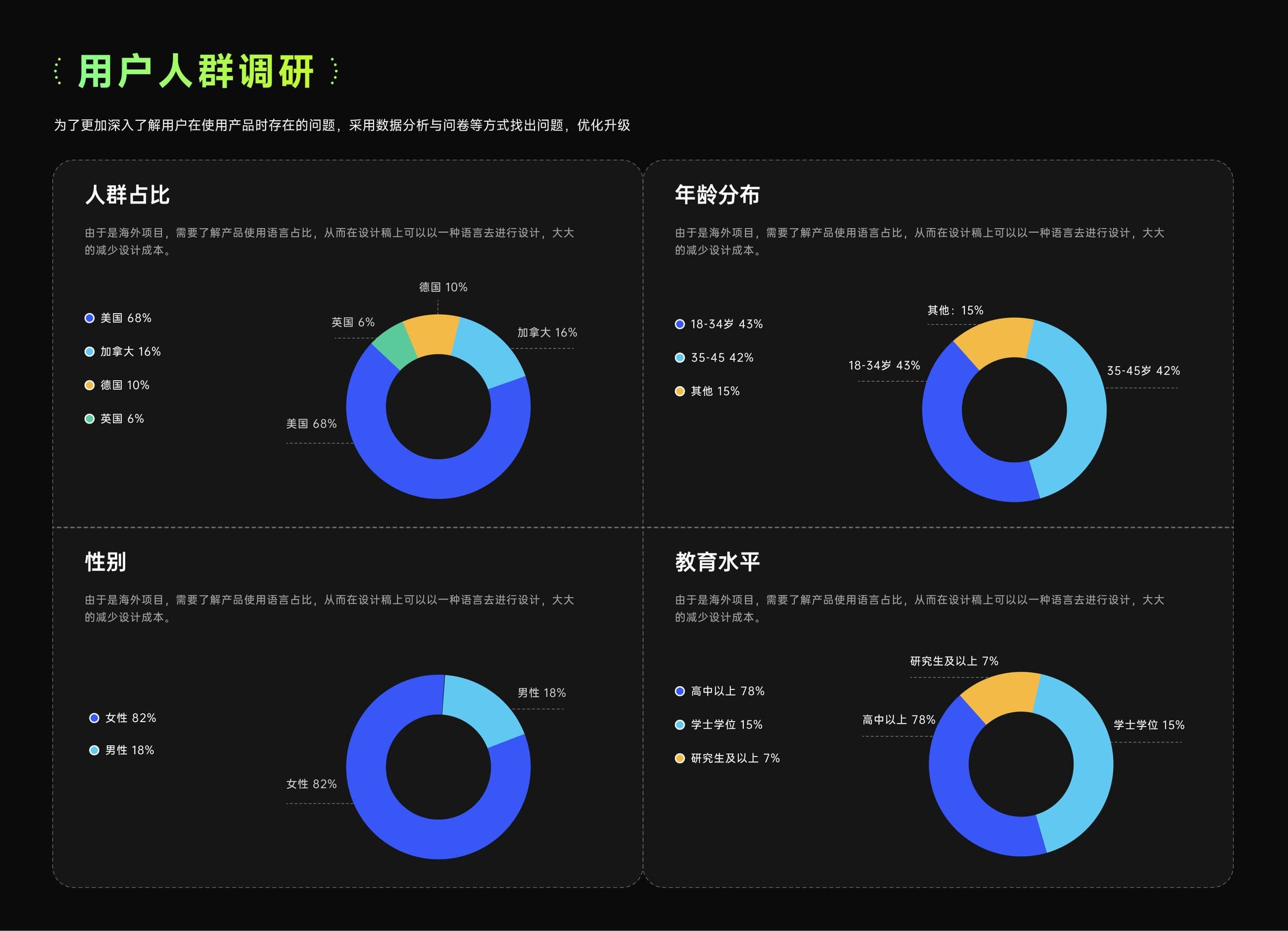
NADULA is a North-American DTC wig brand serving Black women aged 25–40, with millions of registered users and $1B+ annual revenue. After seven years the site had grown by accretion: every team shipped their own patterns, the social channels each ran their own visual language, and the product imagery looked more like a marketplace than a house brand.
I led the end-to-end redesign across PC and Mobile web — brand system, information architecture, purchase flow, PDP, and a 60+ component library that the team still ships against today.
Overview — 02
The problem
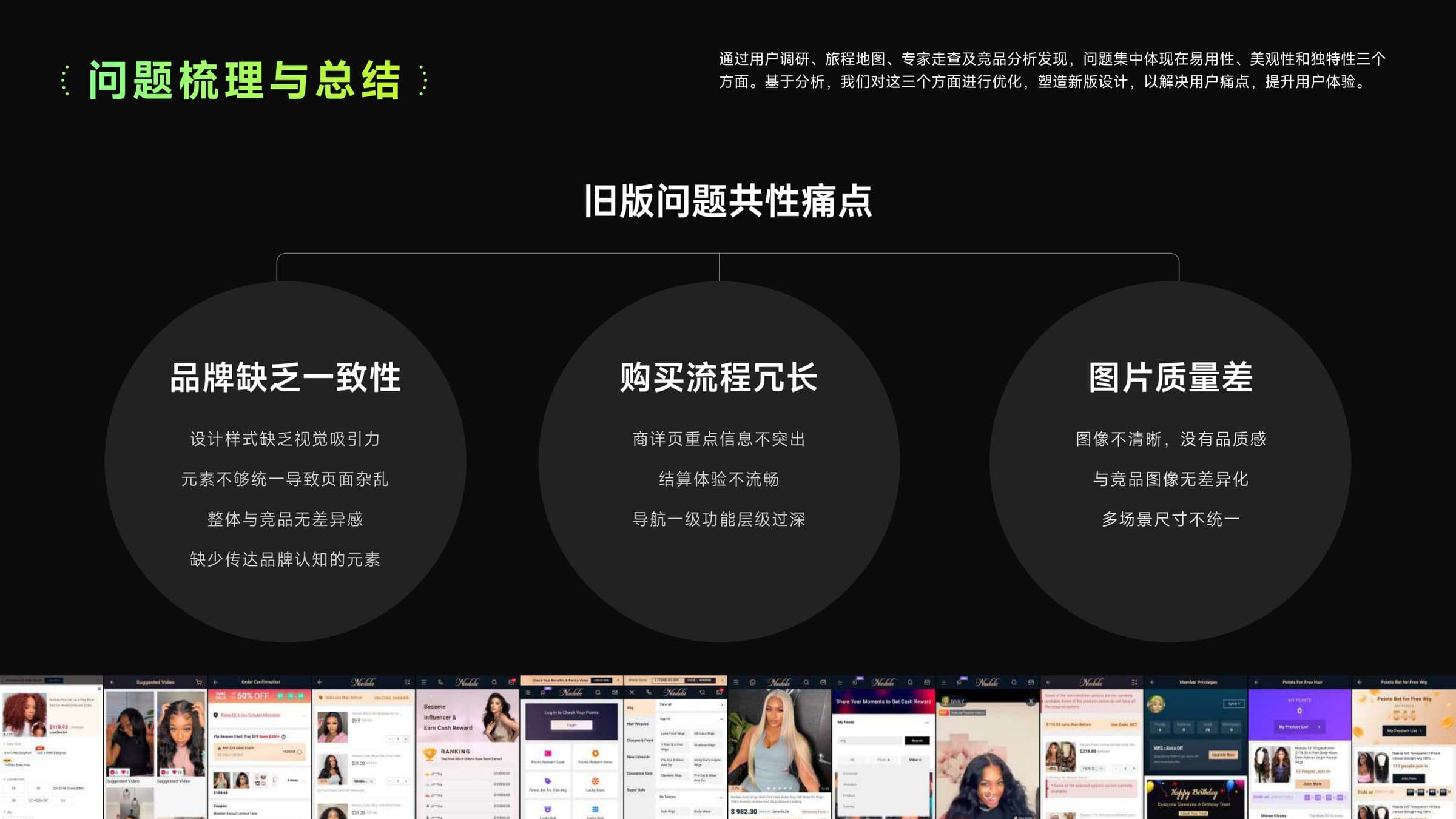
Three pain points compounded each other:
1. No brand consistency — the main site had no tonality, social channels each had their own visual rules, and users had no way to recognise "this is NADULA".
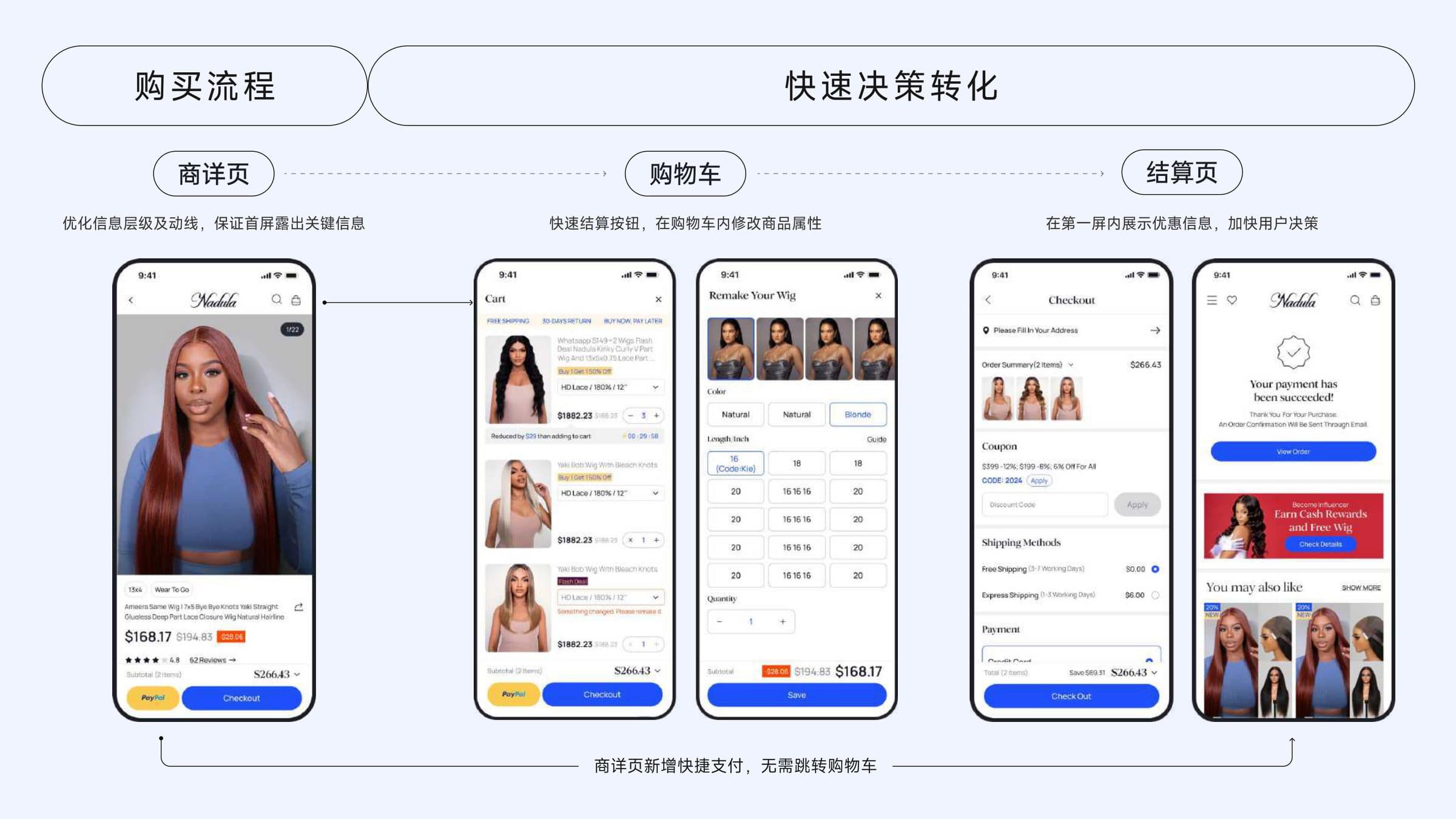
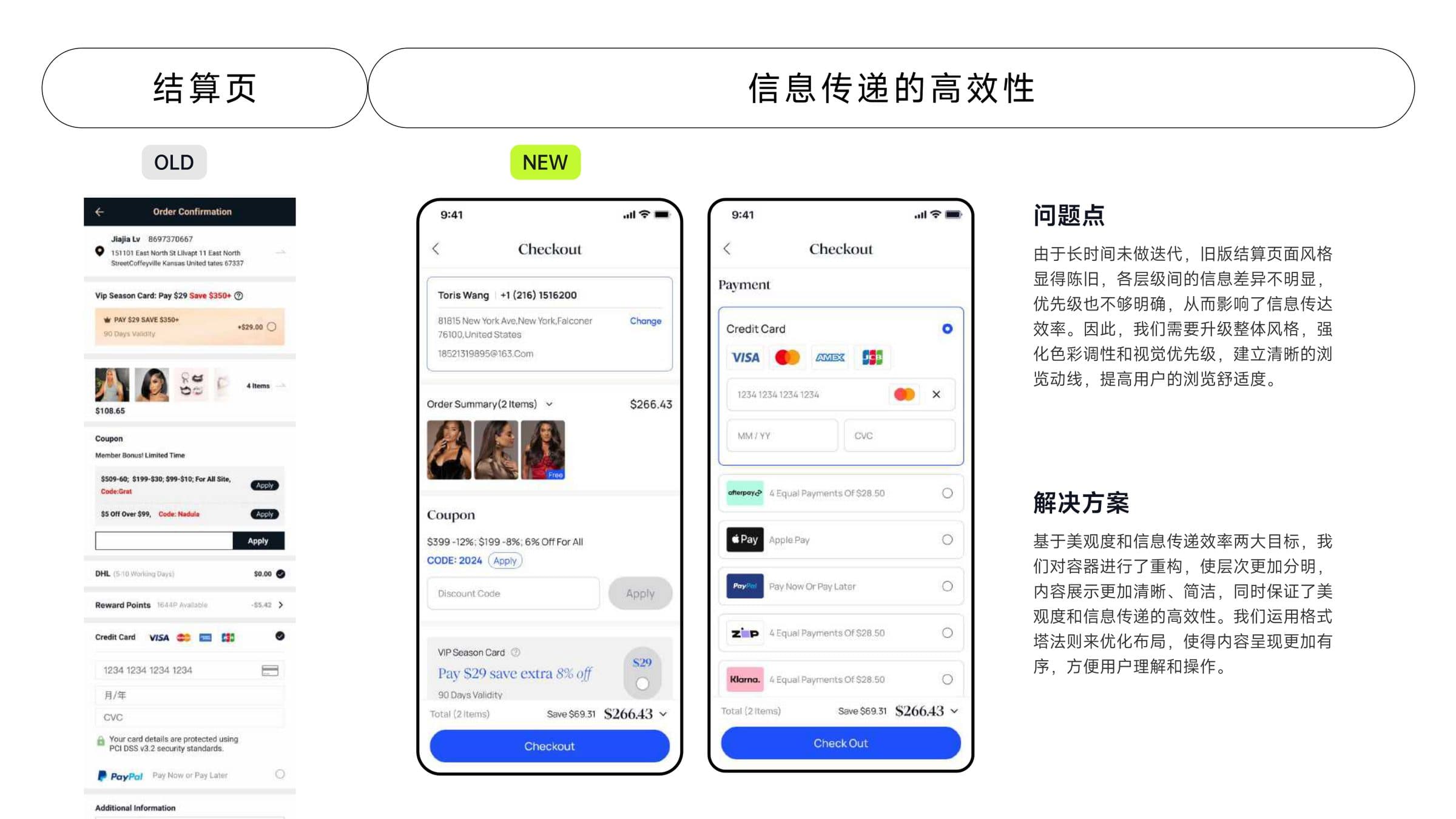
2. A heavy purchase flow — key information buried, learning cost high, checkout bloated with fields. Conversion bled in every hand-off.
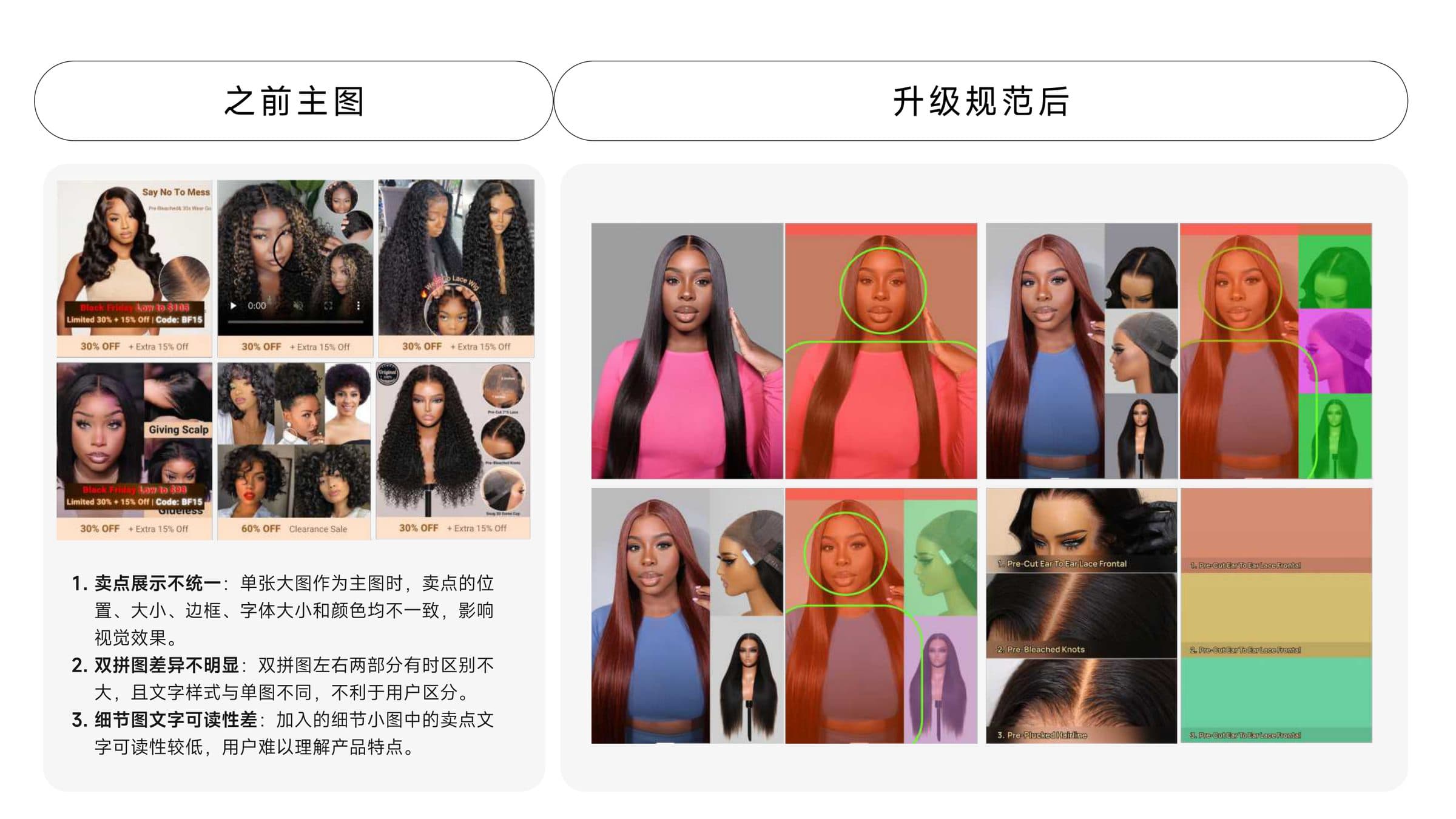
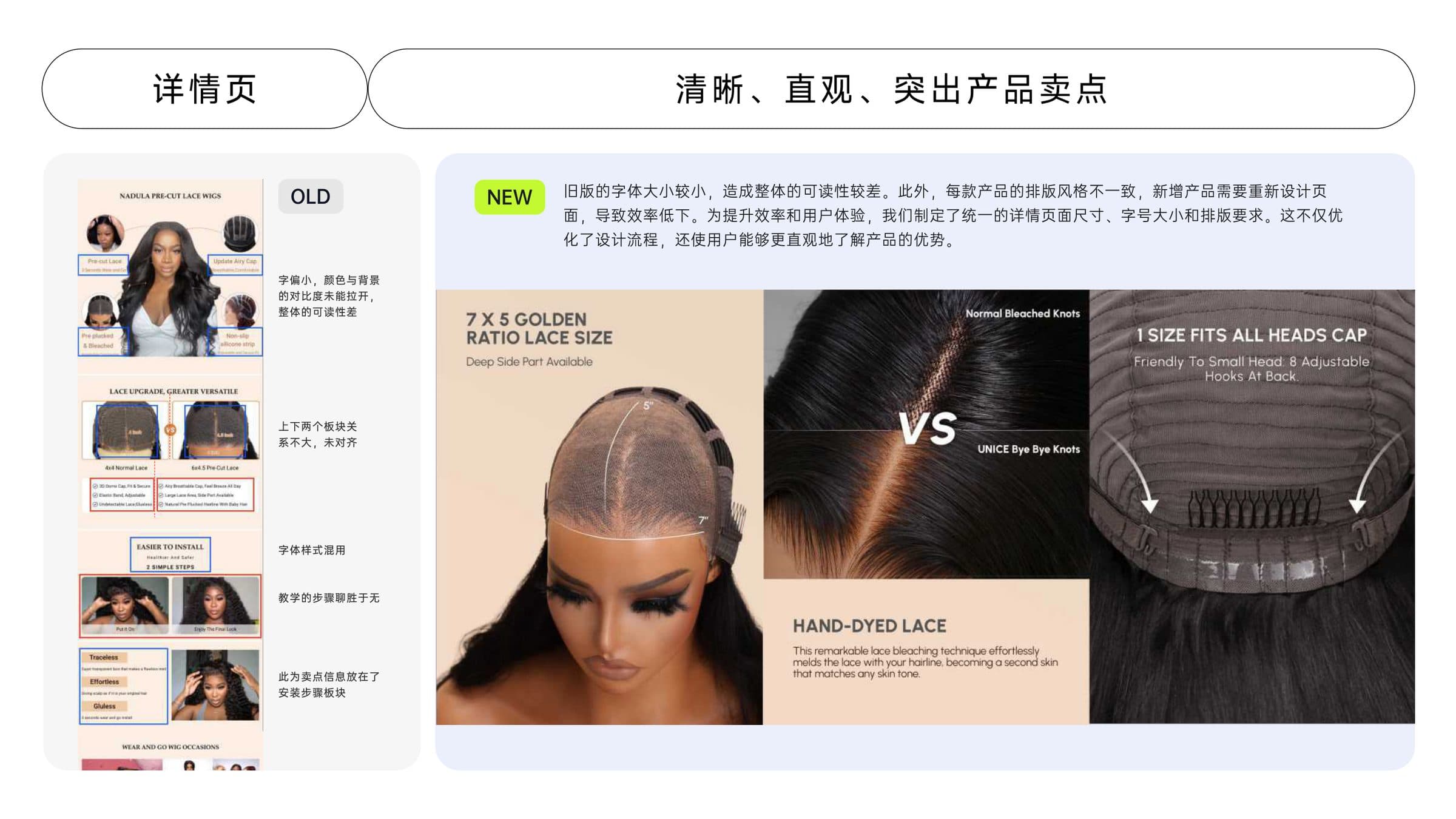
3. Low-quality product imagery — fuzzy, inconsistent sizes, no photography standard. Users couldn't see detail, so they couldn't trust quality, so they returned more.
01 — Research
From gut feeling to evidence
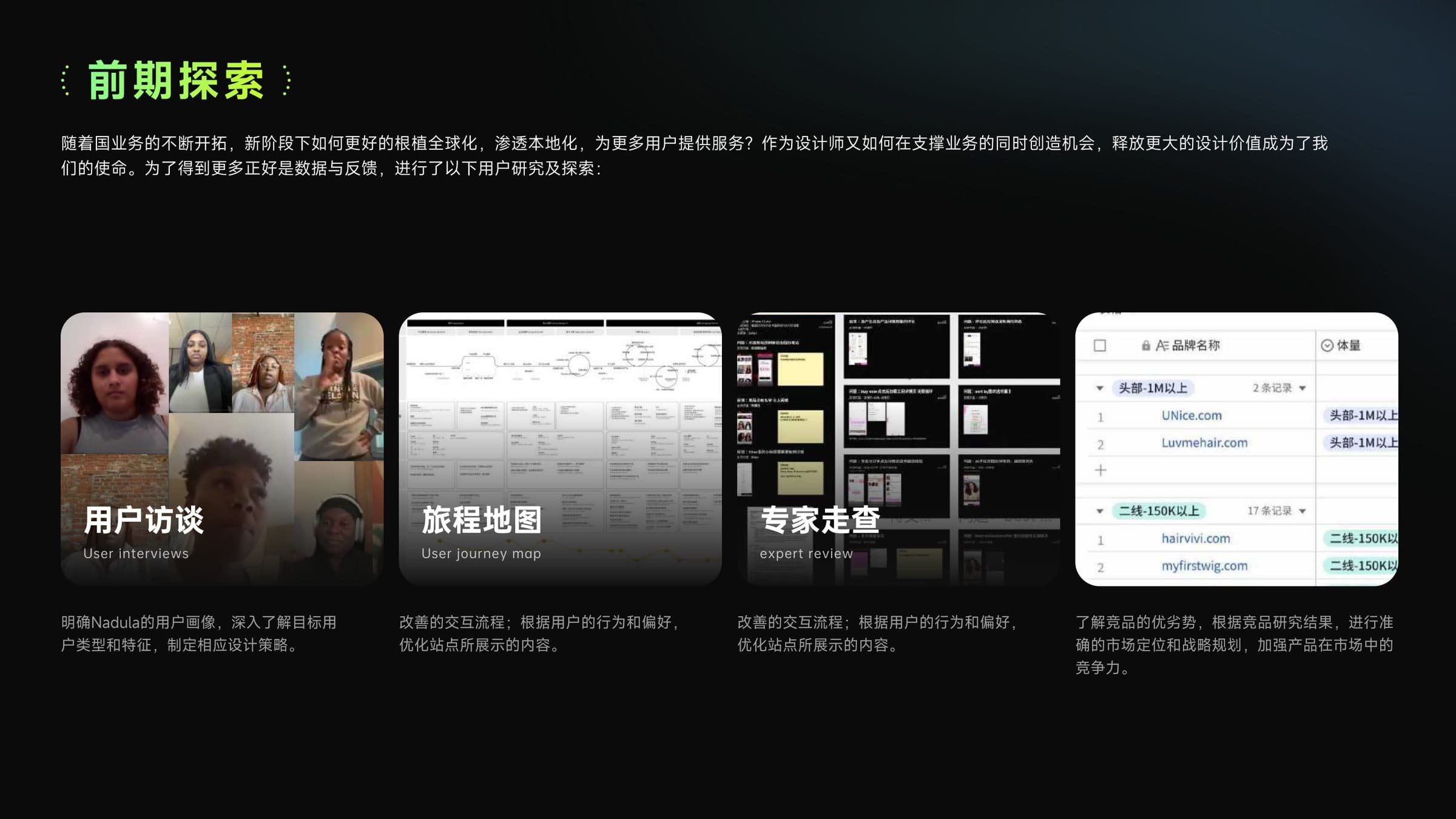
Interviews, journey maps, expert walkthroughs and competitor audits — four lenses that agreed: usability, aesthetics and distinctiveness were all under-served.


02 — Audience
Who we are designing for
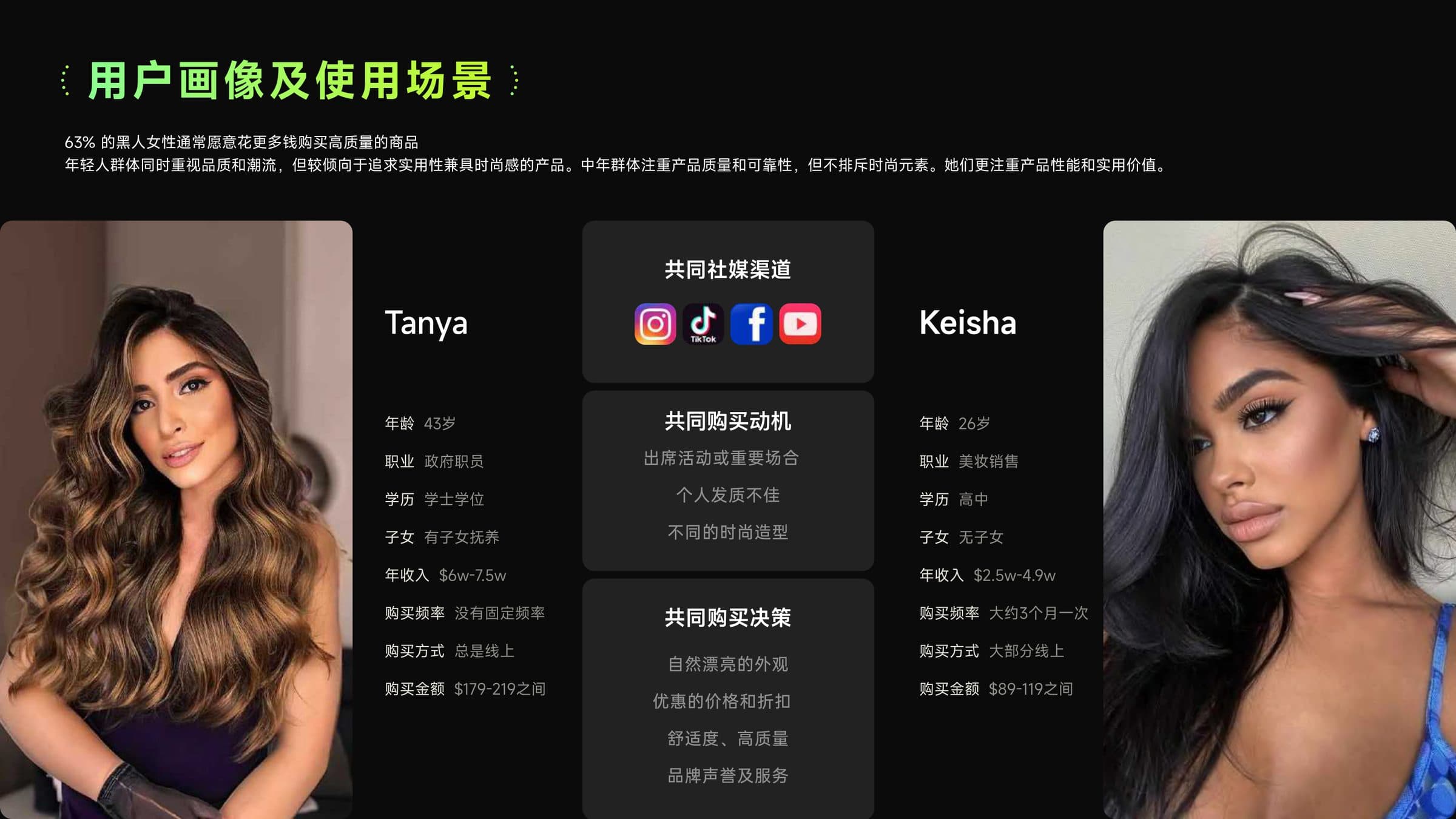
Two personas — Tanya and Keisha — sharing social channels and motivations, but with different price sensitivity and style confidence. The brand tonality test surfaced 'affordable luxury' as the single most resonant positioning.


03 — Brand system
One language across every surface
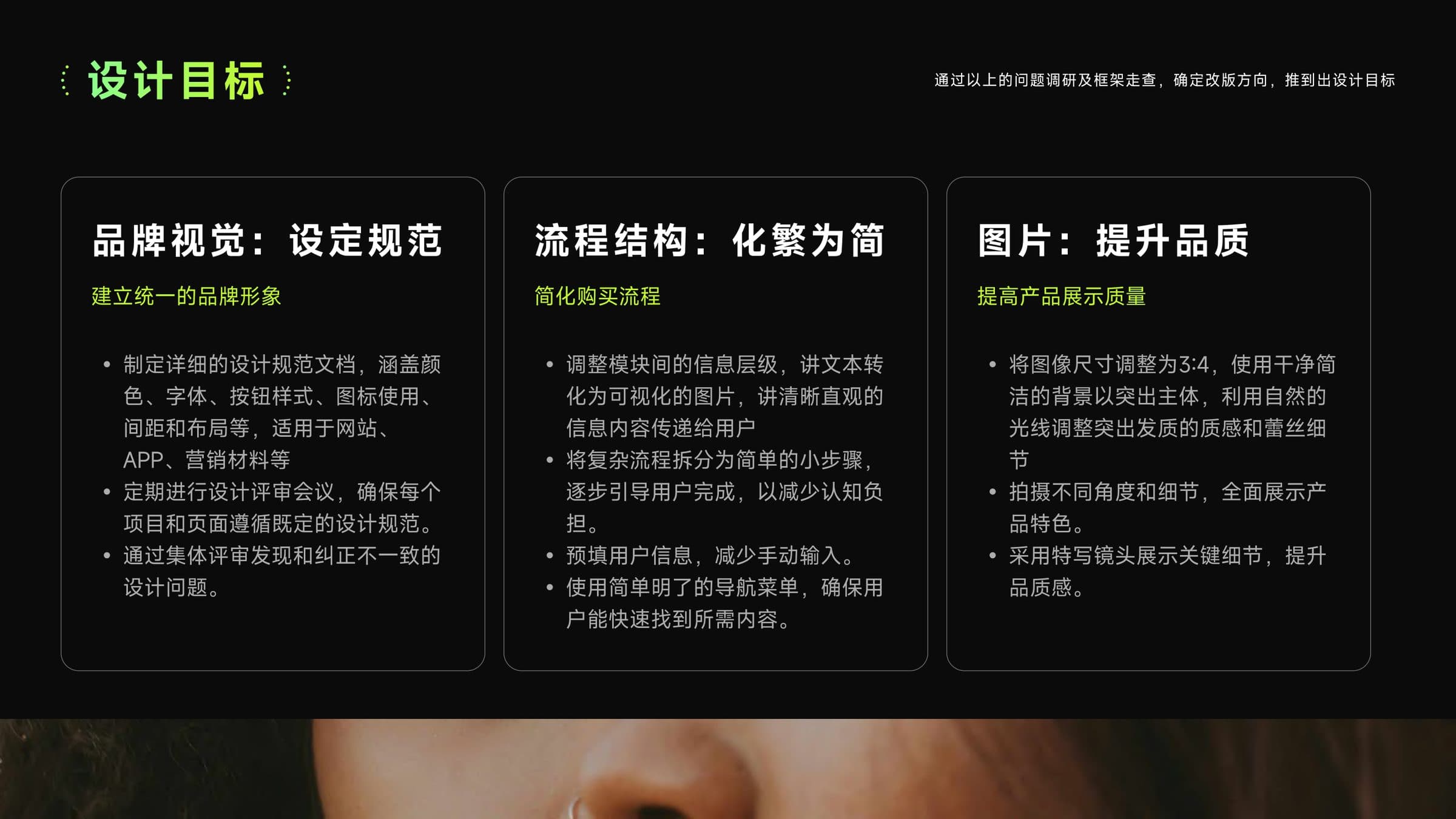
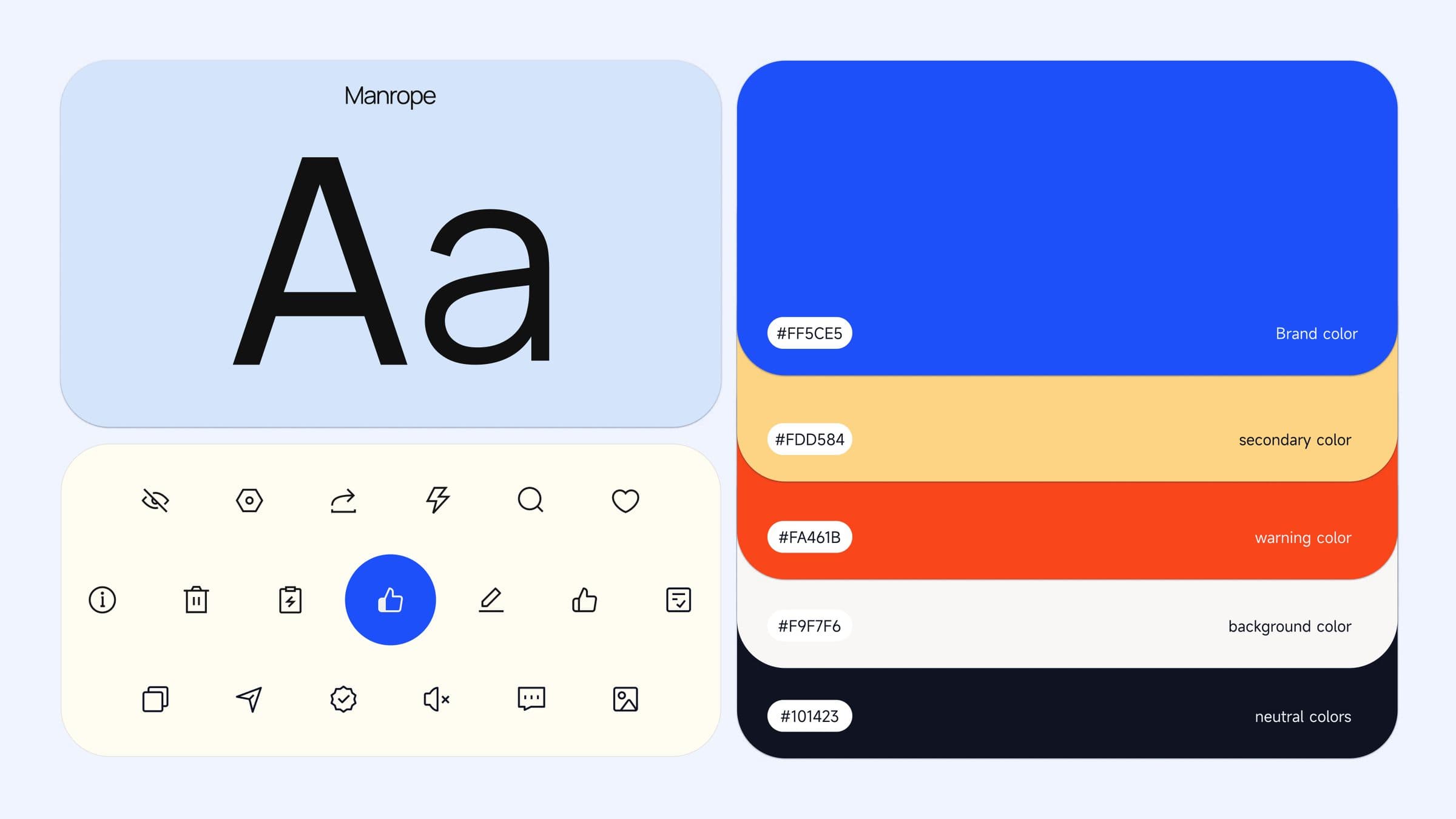
Warm gold primary, Manrope headings, disciplined neutrals. The system covers web, app, email and marketing — so new work inherits brand equity instead of diluting it.


04 — Home & flow
Cut the distance from landing to checkout
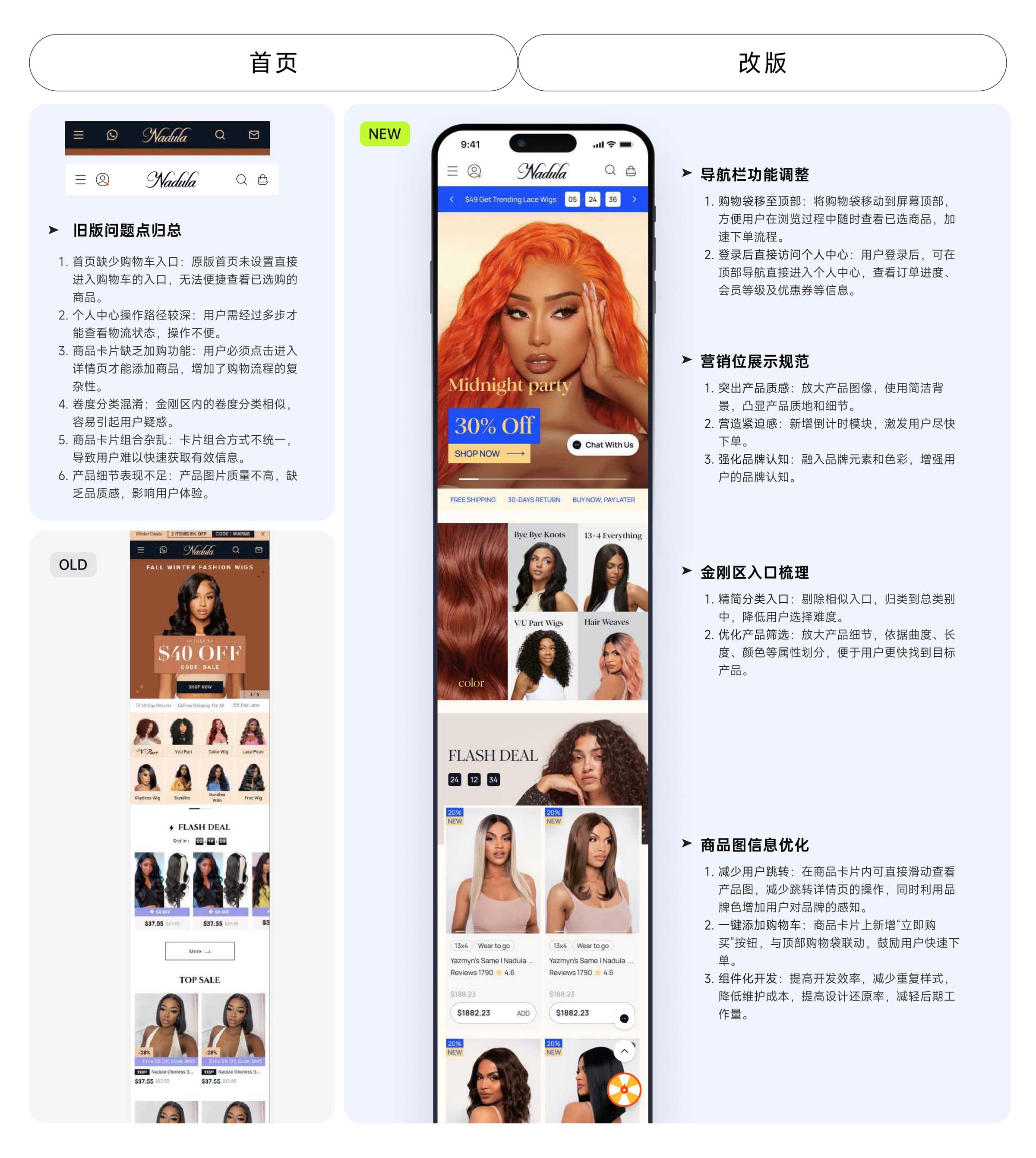
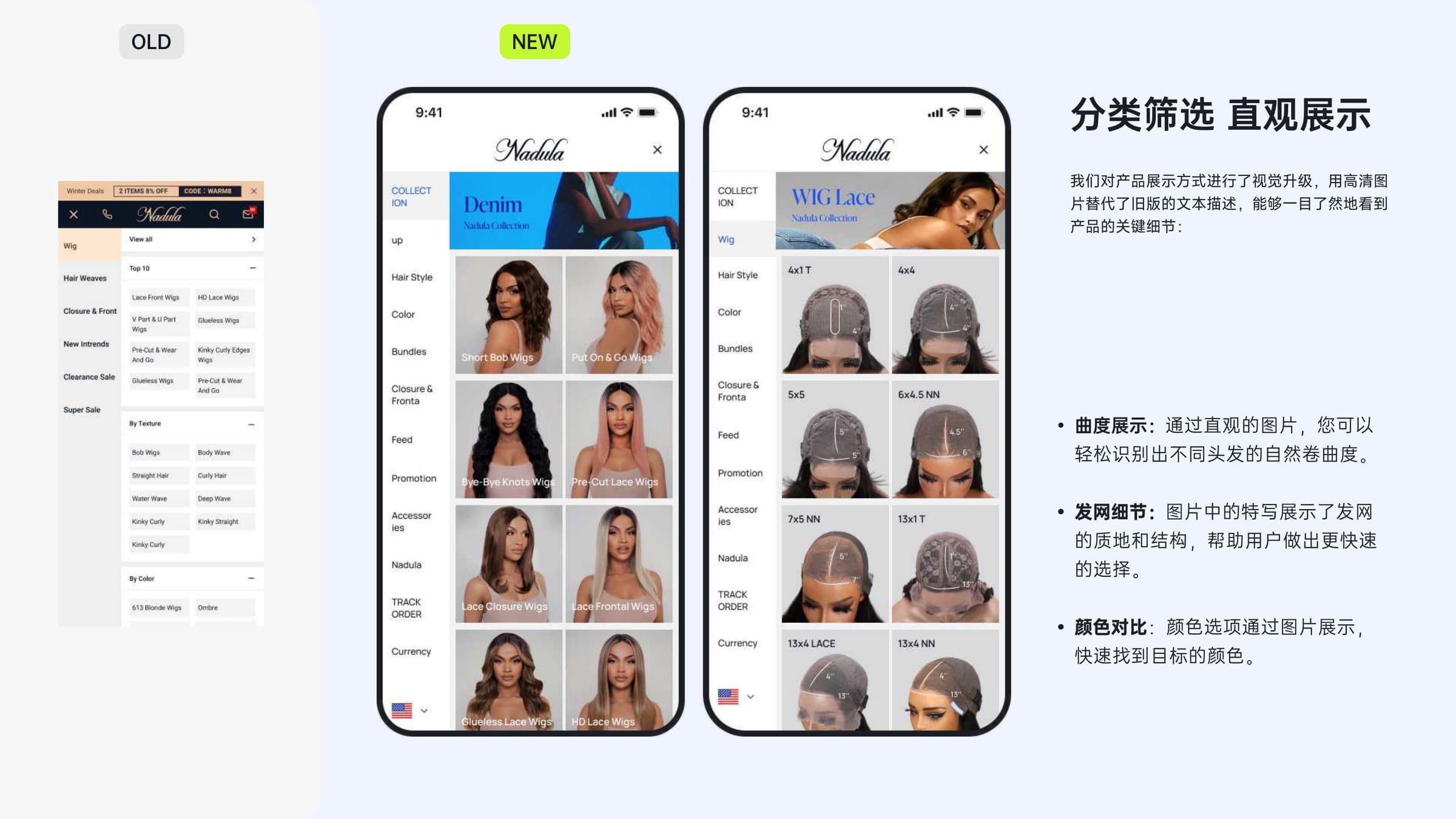
Navigation carts moved top-right, category icons rebuilt, PDP added inline swipe galleries and one-tap add. Key information sits in the first screen; the rest of the page is permission to keep reading, not a list of chores.


05 — AIGC ops
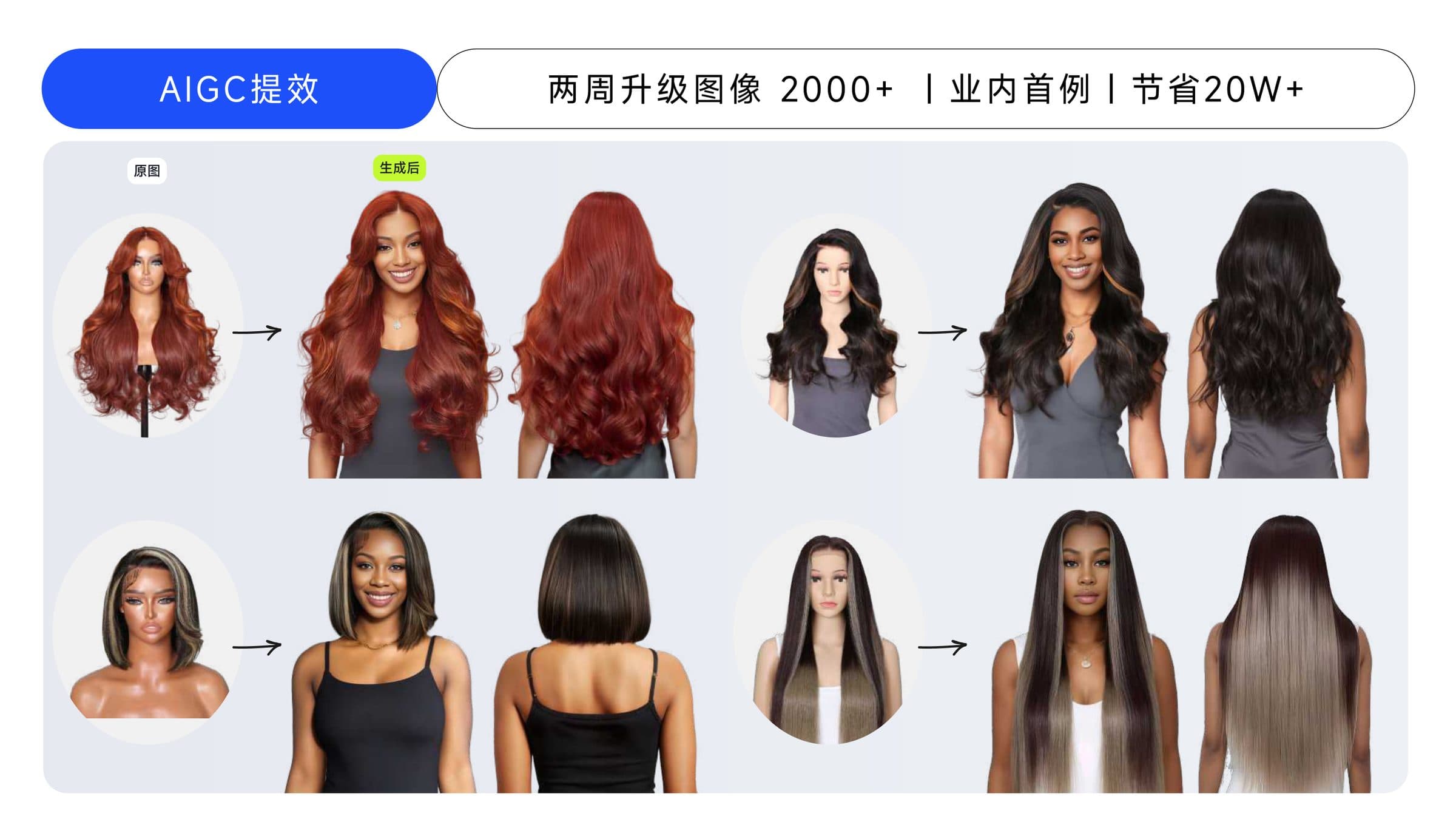
2,000+ product images in two weeks
I piloted an AIGC re-shoot pipeline for the product catalogue — same SKU, cleaner background, consistent lighting, 3:4 ratio. Two weeks, 2,000+ images, a reported RMB 200K+ in saved photography budget, and the first brand-aligned visual unification of the PDP in the company's history.


06 — Product detail page
Rebuilt around trust and decision
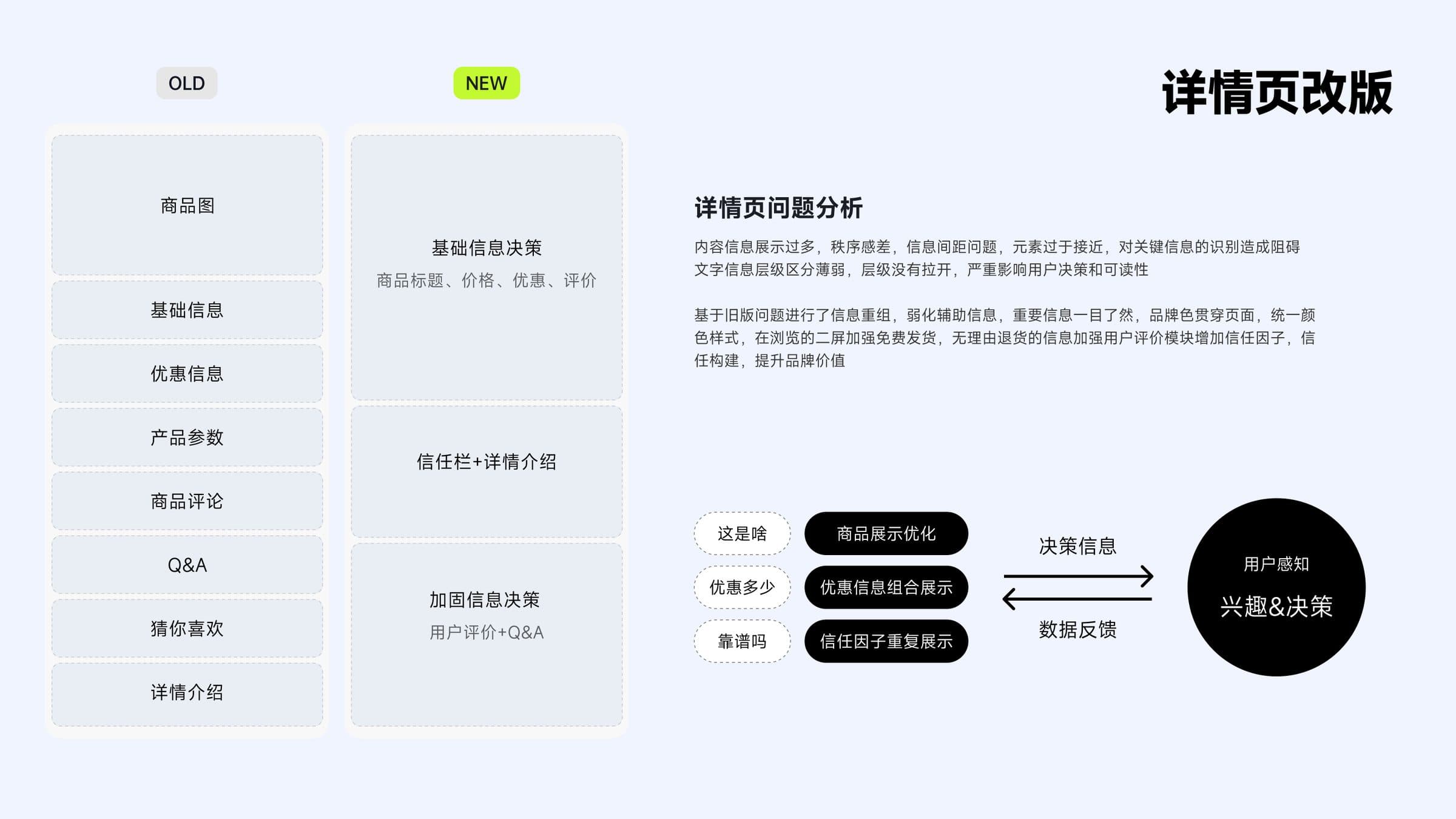
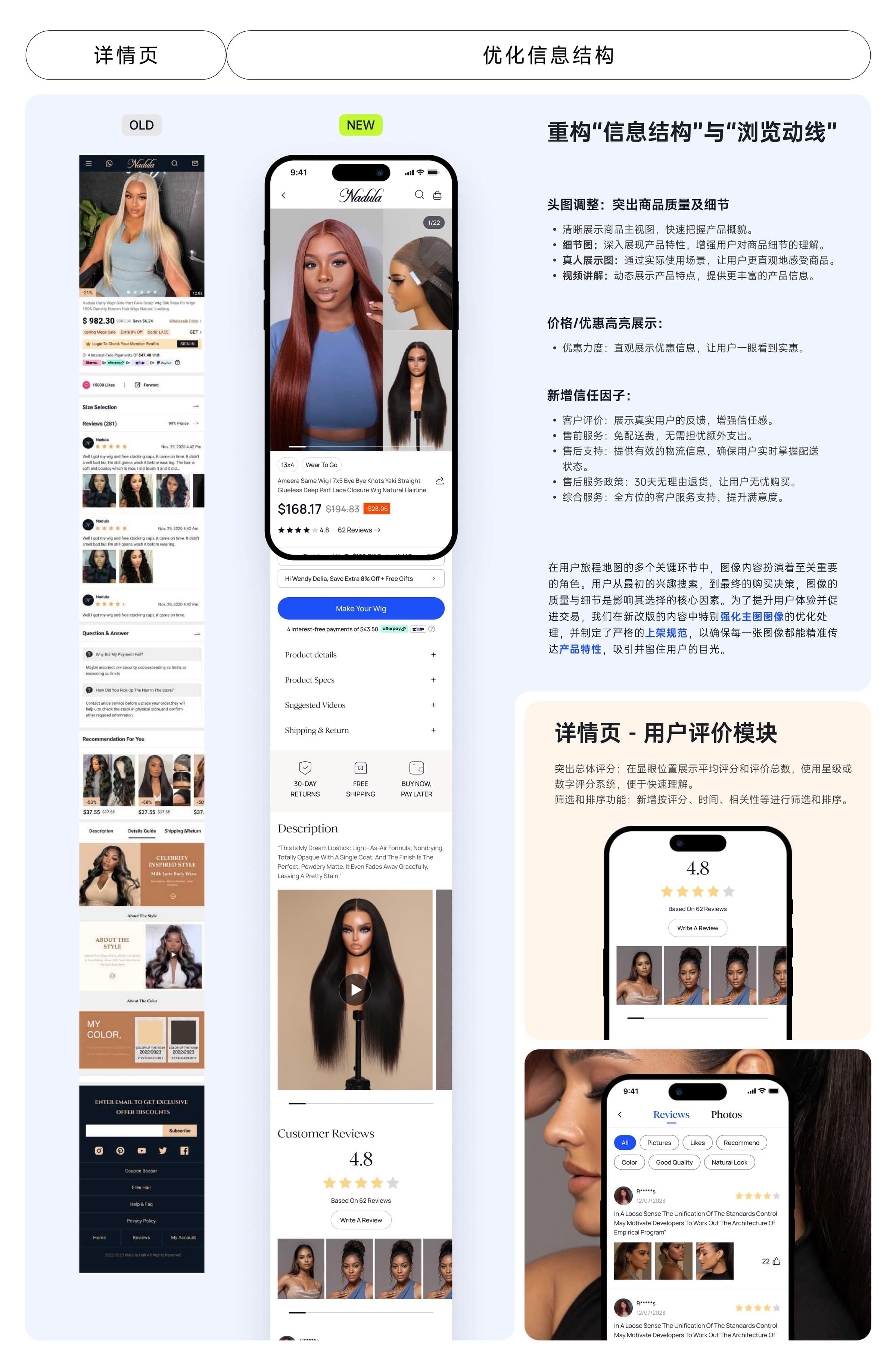
The old PDP was an information dump. I re-sequenced the page around the three questions the user is actually asking — what is it, what's the deal, is it legit — and injected trust factors at every inflection point: real reviews, free-shipping strip, 30-day return.


07 — Post-purchase
Cart · Checkout · Member center
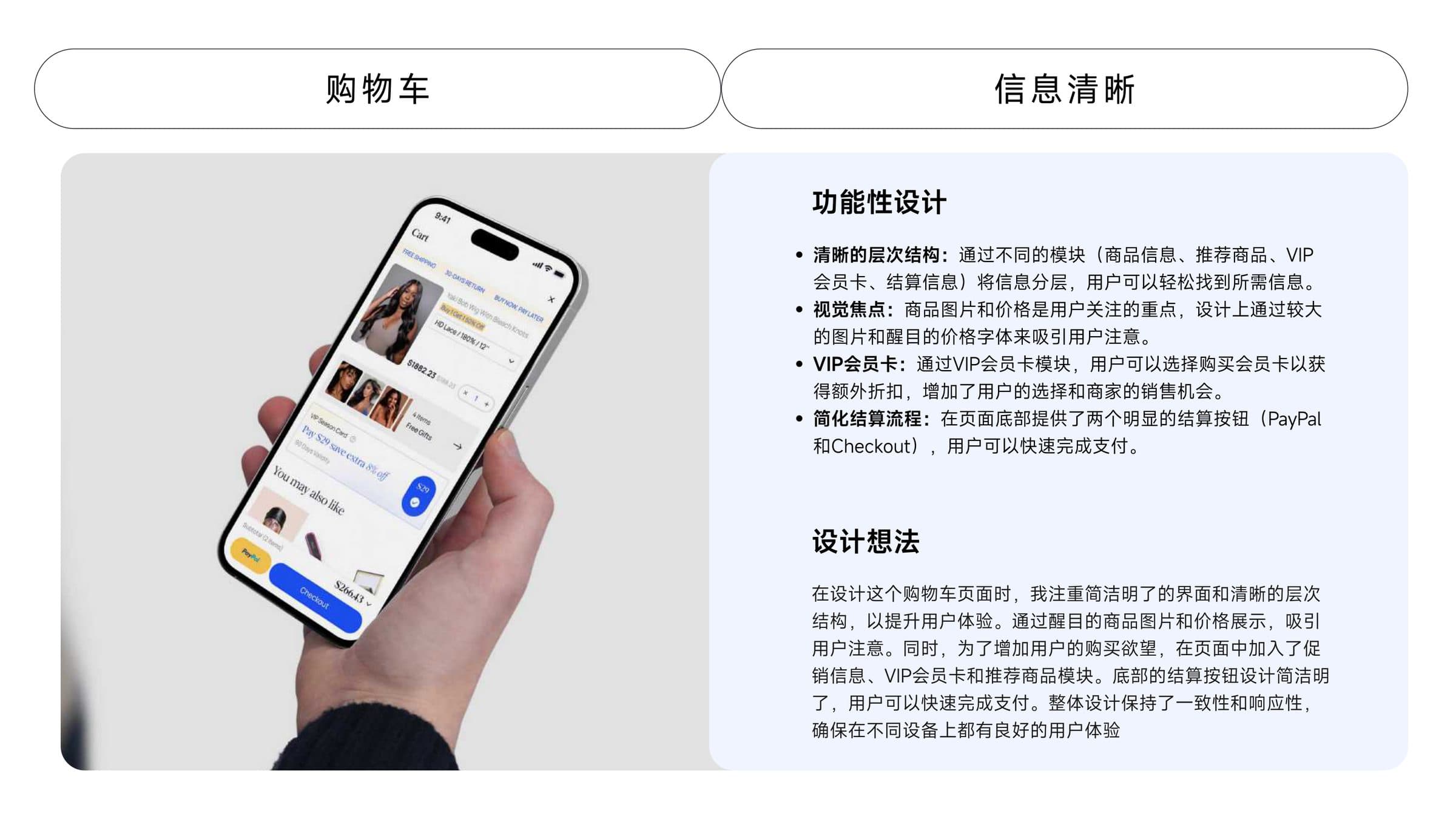
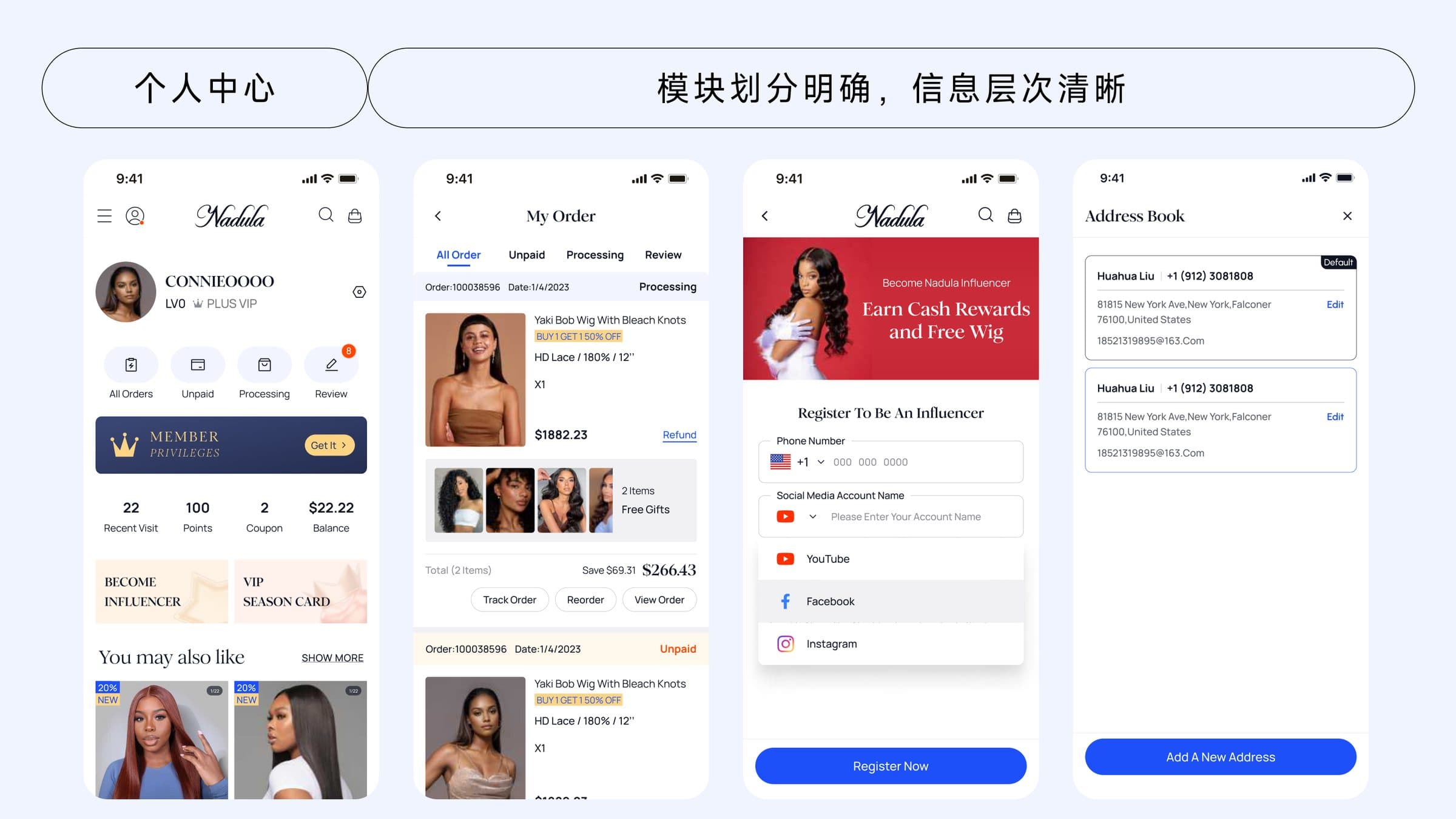
The sequence after 'add to cart' is where confidence is earned or lost. I redesigned cart, checkout and member centre as a single continuous system — clear hierarchy, predictable actions, obvious progress.


08 — Design system
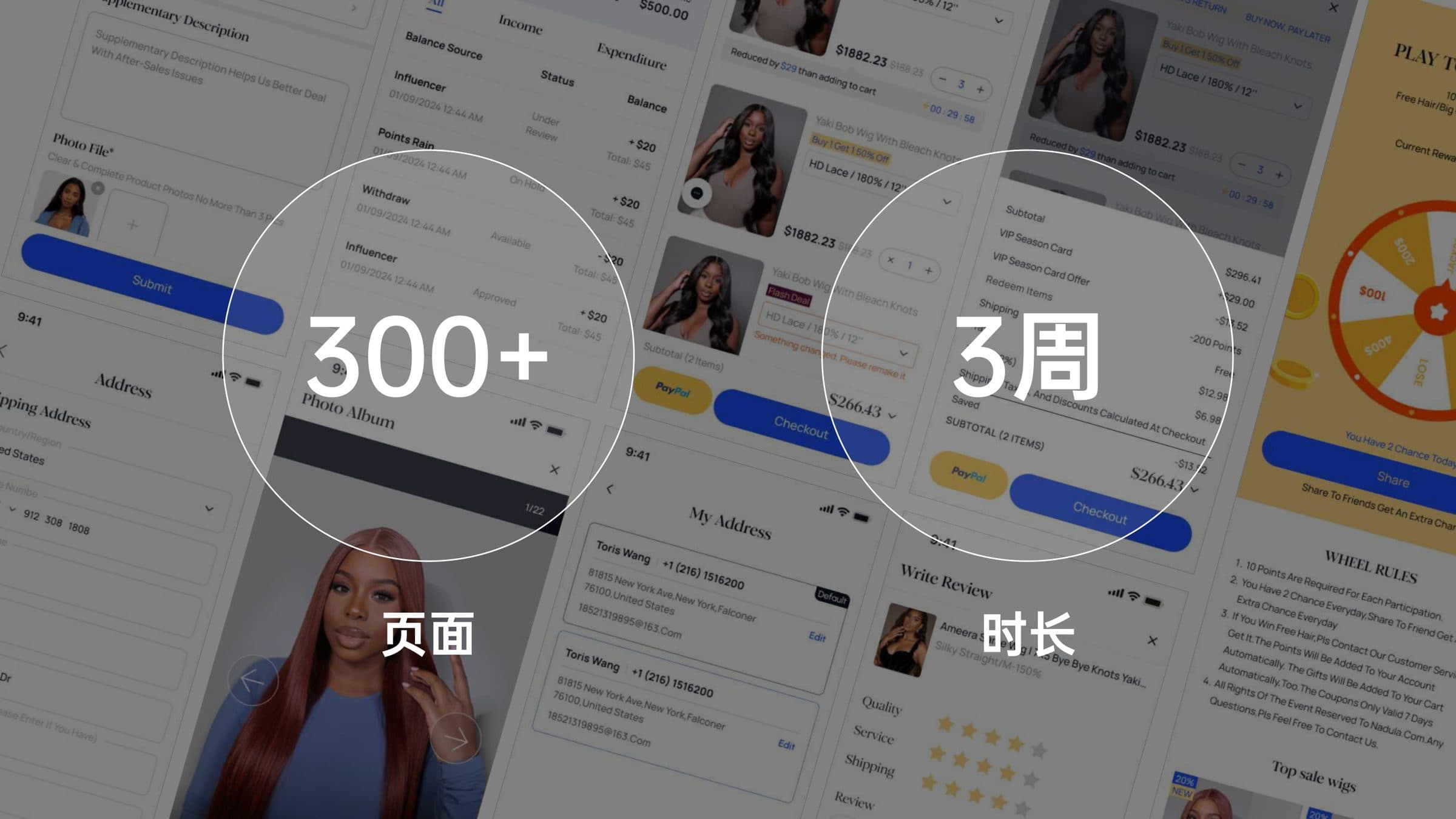
300+ pages, 60+ components, 3 weeks
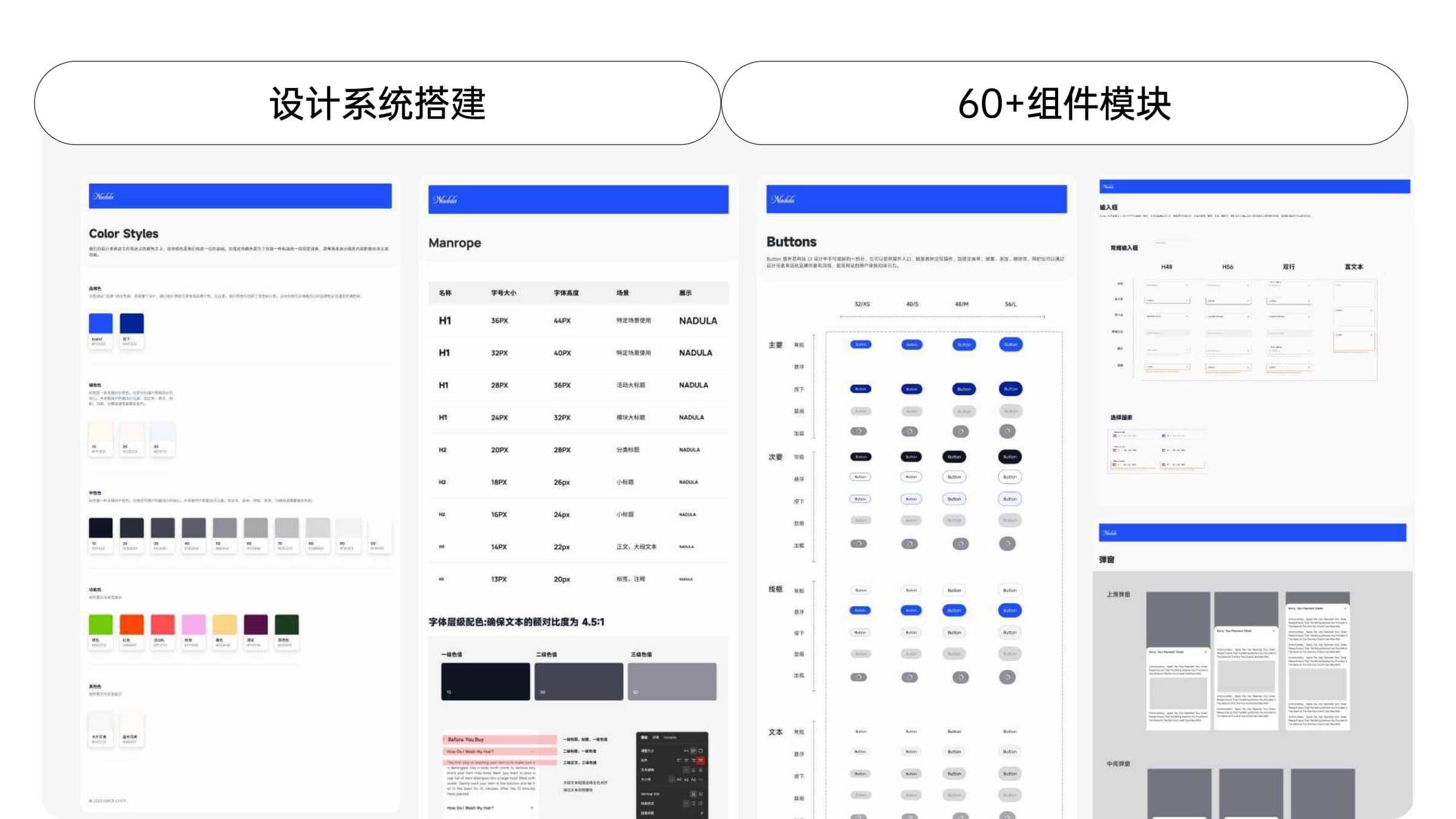
A genuine component library — tokens, primitives, patterns, documentation — shipped alongside the redesign. Team onboarding sped up, visual drift stopped, campaign teams could assemble pages without design review for most routine work.


The Process
Key decisions
- 01
Three words as the single filter
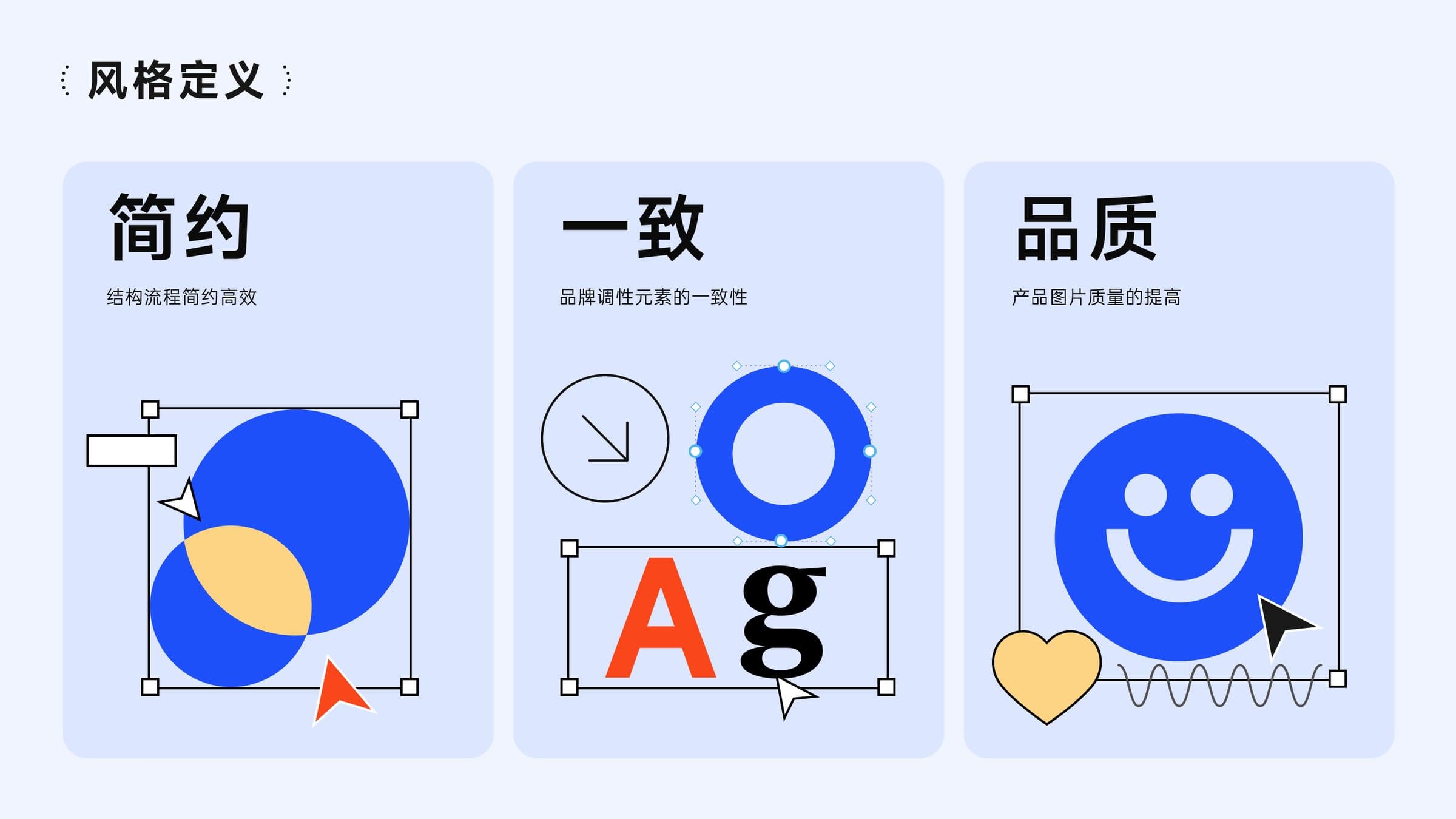
Every redesign has a hundred tempting detours. I gave myself one rule: a change has to move the work further along simplicity, consistency, or quality — and I refused to accept "it looks nice" as a reason. That discipline is why the final site reads as one piece instead of eight teams' opinions.
- 02
AIGC as an operational tool, not a demo
Most teams treat generative imagery as a novelty. I pushed to use it as a supply chain fix — re-shooting a catalog at scale, under one brand recipe, repeatable. The output isn't "AI-looking"; it's just a properly photographed catalogue. That distinction is what let the savings be real (RMB 200K+) and what let the brand tone finally feel unified.
- 03
Trust factors live at decision points, not in a sidebar
Free-shipping strips, 30-day return guarantees, and real reviews usually hide in side widgets. I put them exactly where the user hesitates — above price on PDP, above the CTA in checkout, in the empty state of the cart. Each reassurance earned its pixels by appearing the instant doubt does.
Impact
What the work actually did.
01
The problem it solved
The redesign pulled a fragmented, marketplace-feeling site back into a recognizable brand. Three teams that used to ship in parallel with no shared visual rules now build against one system. The company's first coherent brand surface — after seven years of accretion — was this project.
02
How the design answered
A small, disciplined design system plus a production-scale AIGC image pipeline did most of the heavy lifting. The system made consistency cheap; AIGC made quality affordable. Together they flipped the unit economics of design inside the company.
03
Value left behind for the team
- 01
User satisfaction lifted 12.2% post-launch; product image CTR up 15.6%.
- 02
Delivered a 60+ component design system, covering 300+ pages within 3 weeks of rollout.
- 03
AIGC image pipeline re-shot 2,000+ SKUs in two weeks, saving 200K+ RMB in photography budget — a first in the category.
- 04
Earned two internal honour certificates for cross-team design leadership.
Reflection
What this project leaves me with.
The most durable thing I built on NADULA wasn't a page — it was a filter. Three words, applied to every request that came in. That filter outlasts me; the pages don't.
The second thing I learned is that production tools can be design decisions too. Bringing AIGC into the image pipeline wasn't a "let's try it" moment; it was the unlock that made consistency economically possible. I'll be more aggressive about treating operational constraints as design surfaces from now on.
If I had another six months, I'd close the loop into merchandising — giving category managers a live view of where the system is working and where it's drifting, so quality becomes a standing habit instead of a redesign event.