Studio
05 / 06Live · Millions of active users
SUPERMONKEY

Three years of growth design for the fitness brand that refused to sell annual cards.

SUPERMONKEY case cover — growth outcome metrics
Role
Senior Experience Designer
Timeline
~3 years
Scope
Mini-program · APP · Back-office · Campaign Design
Year
2020 – 2023
Growth DesignFitness / LifestyleMulti-surfaceCampaign Ops

Overview — 01

Context

SUPERMONKEY is a Chinese fitness unicorn with a famously opinionated product model — pay-per-class, no annual contracts, a "just walk in" brand feel. Across three years I worked on almost every customer-facing surface: mini-program, APP, back-office tools for studio ops, and the campaign design that drives their heavy seasonal pushes (Super Friday, Double 11).

My job was growth design, defined precisely: use design to move user behaviour along the flow — discover, book, attend, share — and to carry that behaviour into repeatable habits.

Overview — 02

The problem

Pay-per-class means the product can never relax — every single session has to be re-sold. Three problems compounded:

1. The booking flow was decision-heavy. Users had to juggle city, studio, coach, schedule, and class type before reaching a "Book" button. Cognitive load bled conversion.

2. Wayfinding to studios was a real cause of class no-shows. Users couldn't find obscure mall units and gave up.

3. The in-app experience had no post-class emotional hook, so habit formation was weak. Users kept booking, but the product was never a daily presence.

01 — Design principles

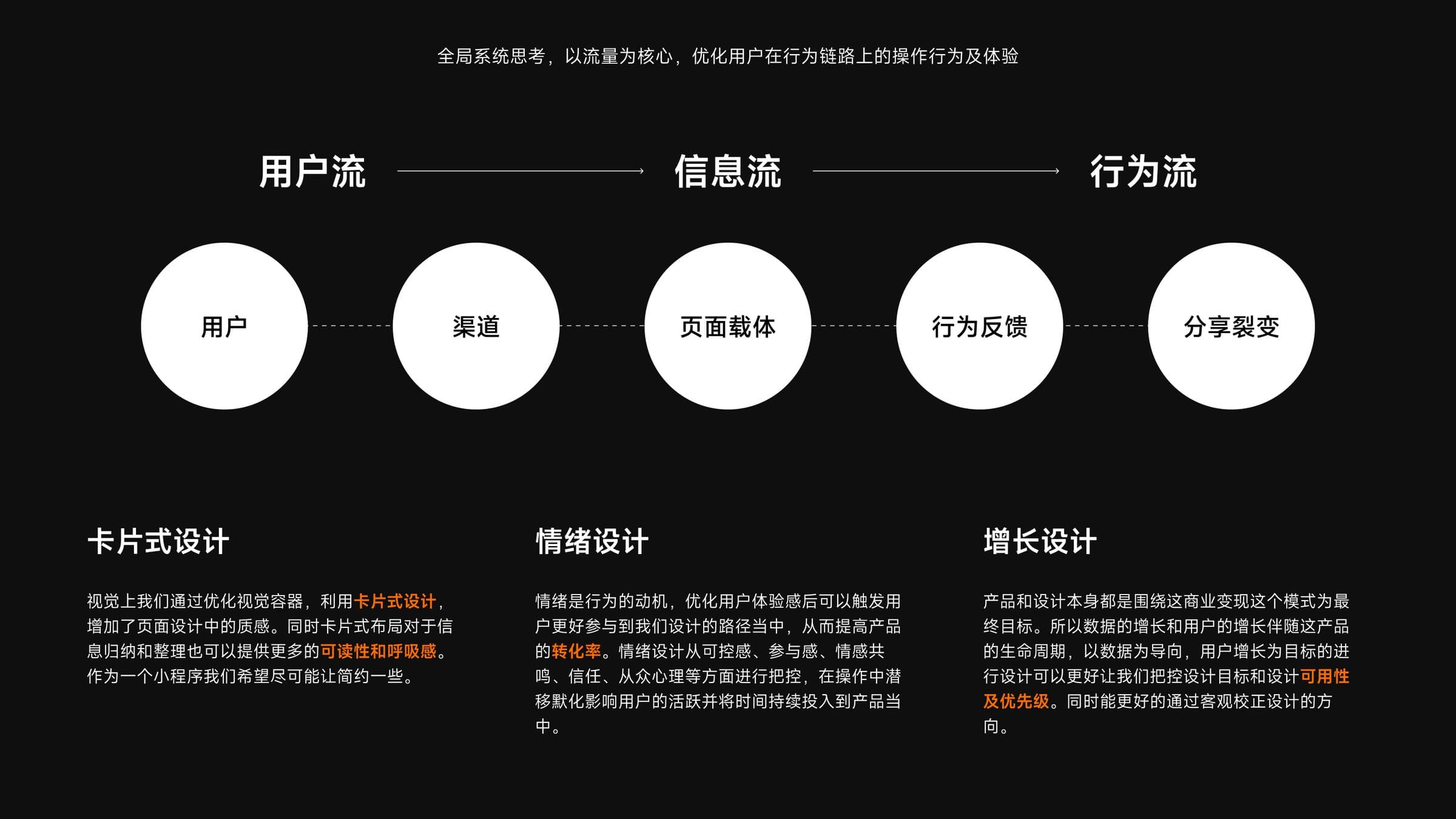
Design principles: cards · emotion · growth

The three lenses I put on everything, from booking screens to campaign banners. They kept the team honest about what a design change was meant to do.

Growth design principles

02 — Booking flow

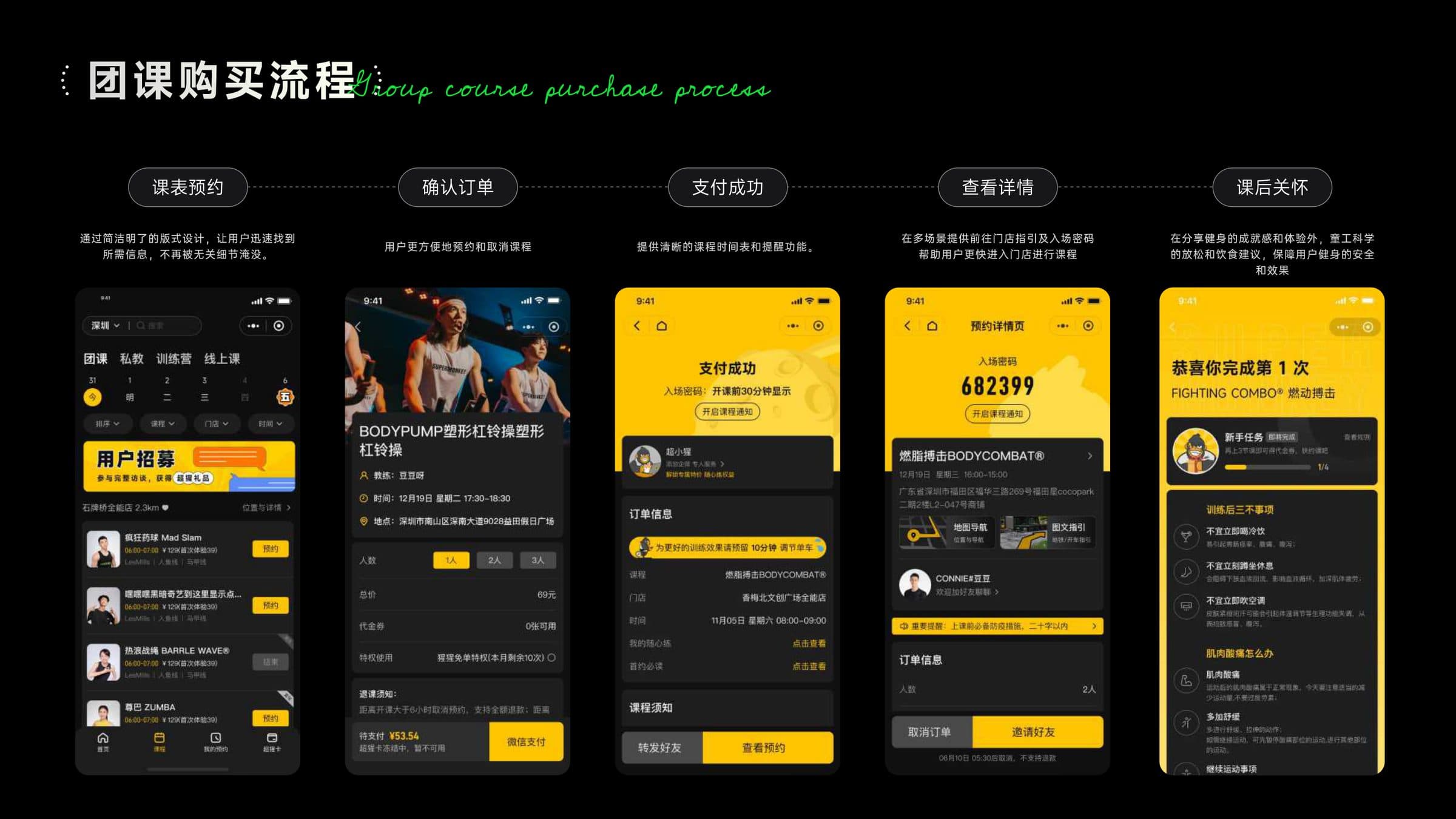
Group class purchase — five screens, one thought

Schedule → confirm → pay → details → post-class care. I re-sequenced the flow so each screen does one thing well, picks up the baton cleanly, and hands the user forward — including the easy-to-miss after-class touch.

Group course purchase flow — five steps
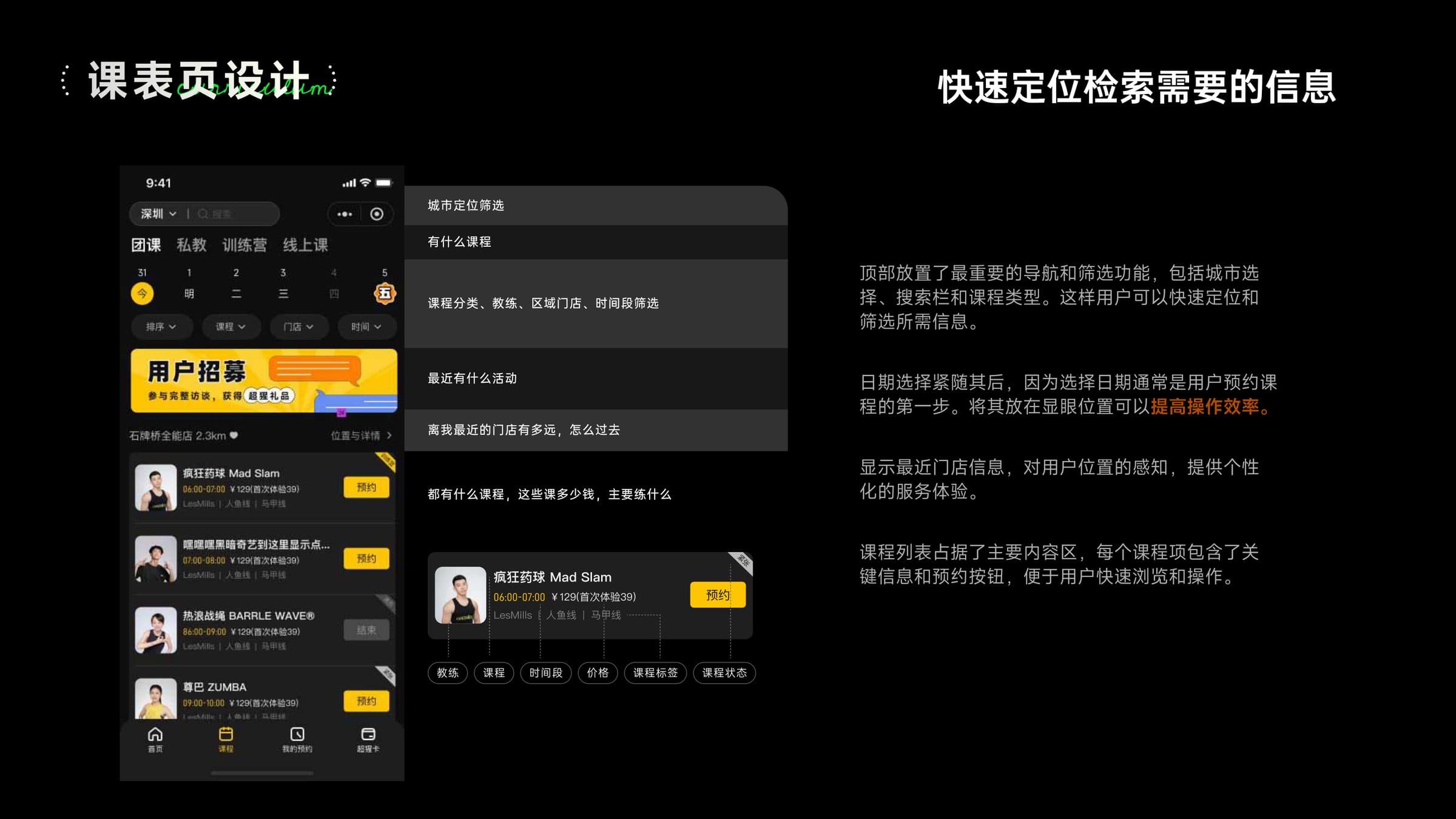
Schedule page — city, coach, time filters

03 — Wayfinding

Store Guide — a spec to stop being late for class

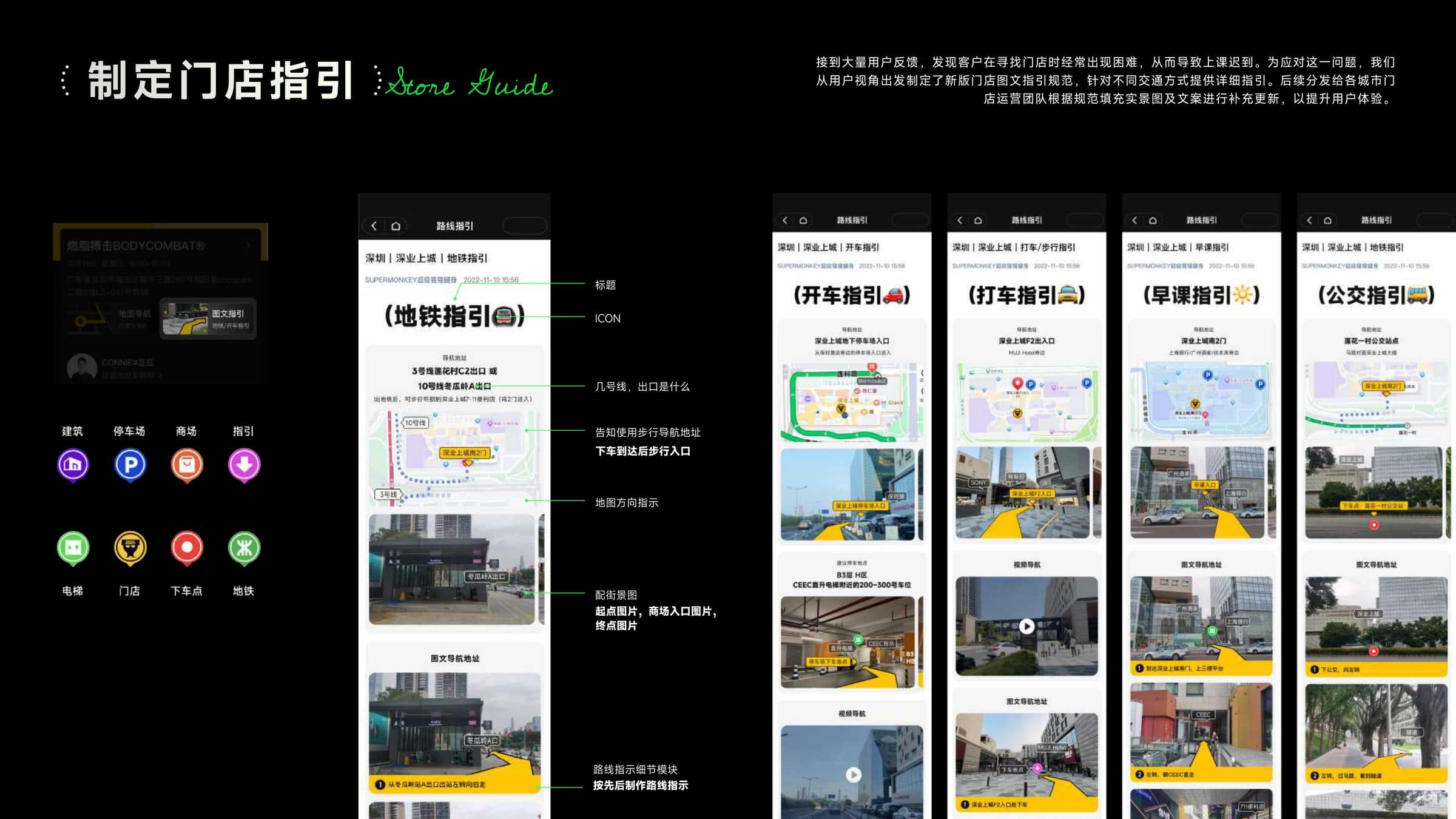
Based on repeated user complaints of 'I can't find the studio' I authored a wayfinding spec — which line, which exit, walking cues, photographed entrances — then rolled it out to every city's ops team so studio staff could populate the template locally.

Store Guide — spec structure
Store Guide — applied to real studios

04 — Campaign design

Super Friday · Double 11

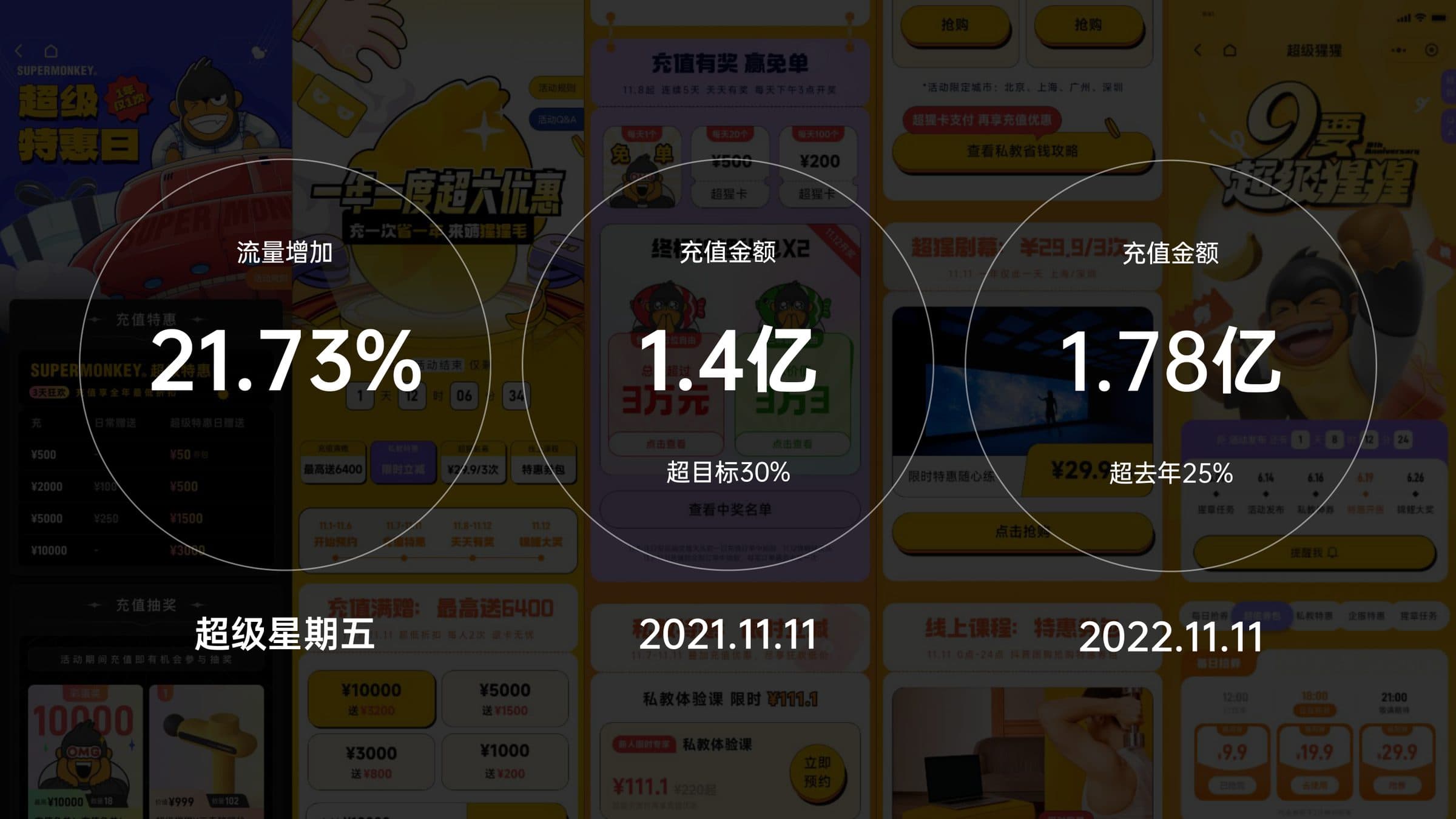
Two flagship seasonal campaigns where design has to hit number targets. I owned visual direction and conversion-critical surfaces across both.

Campaign outcome metrics

05 — APP

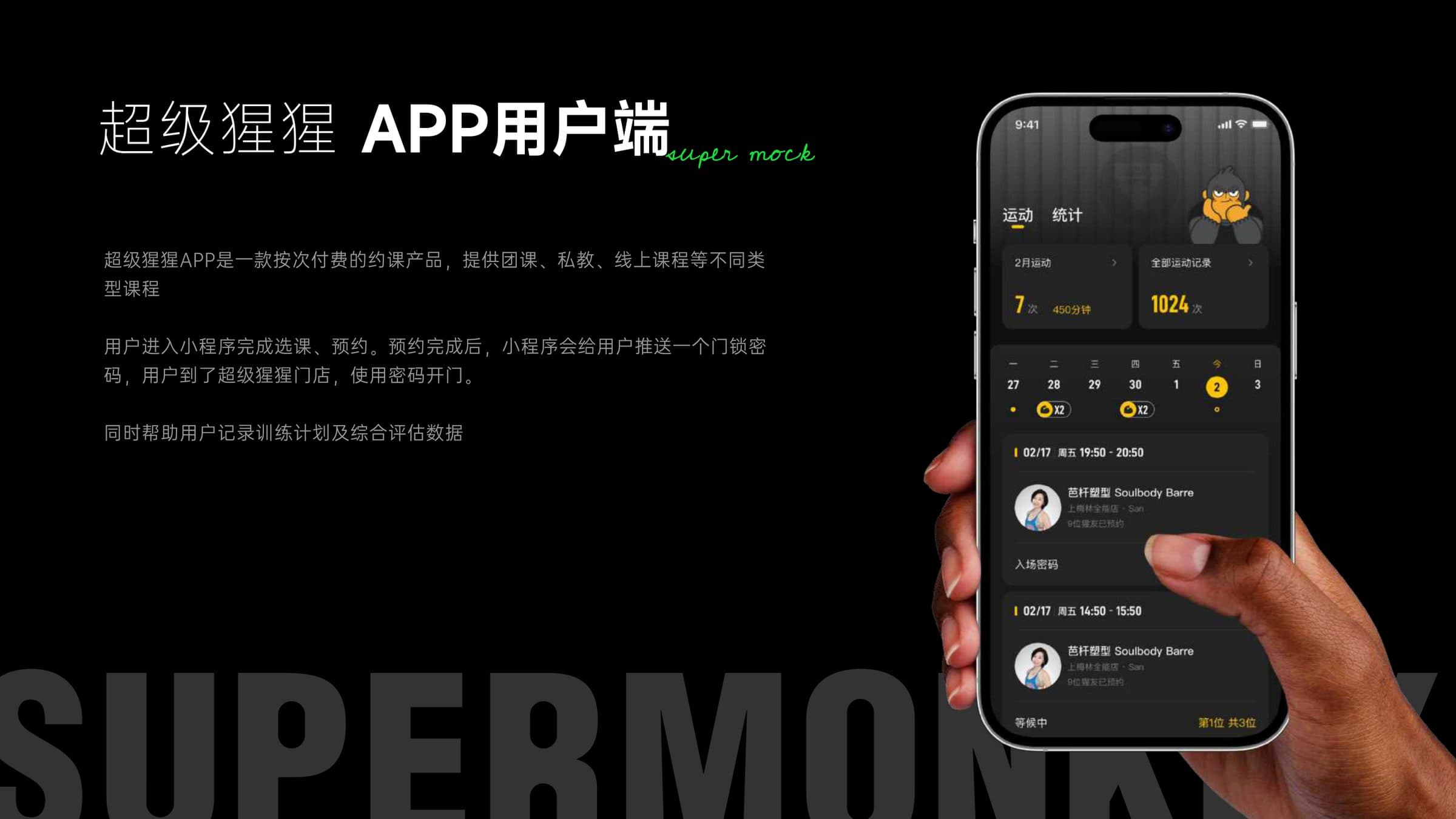
Super Mock — four modules, one rhythm

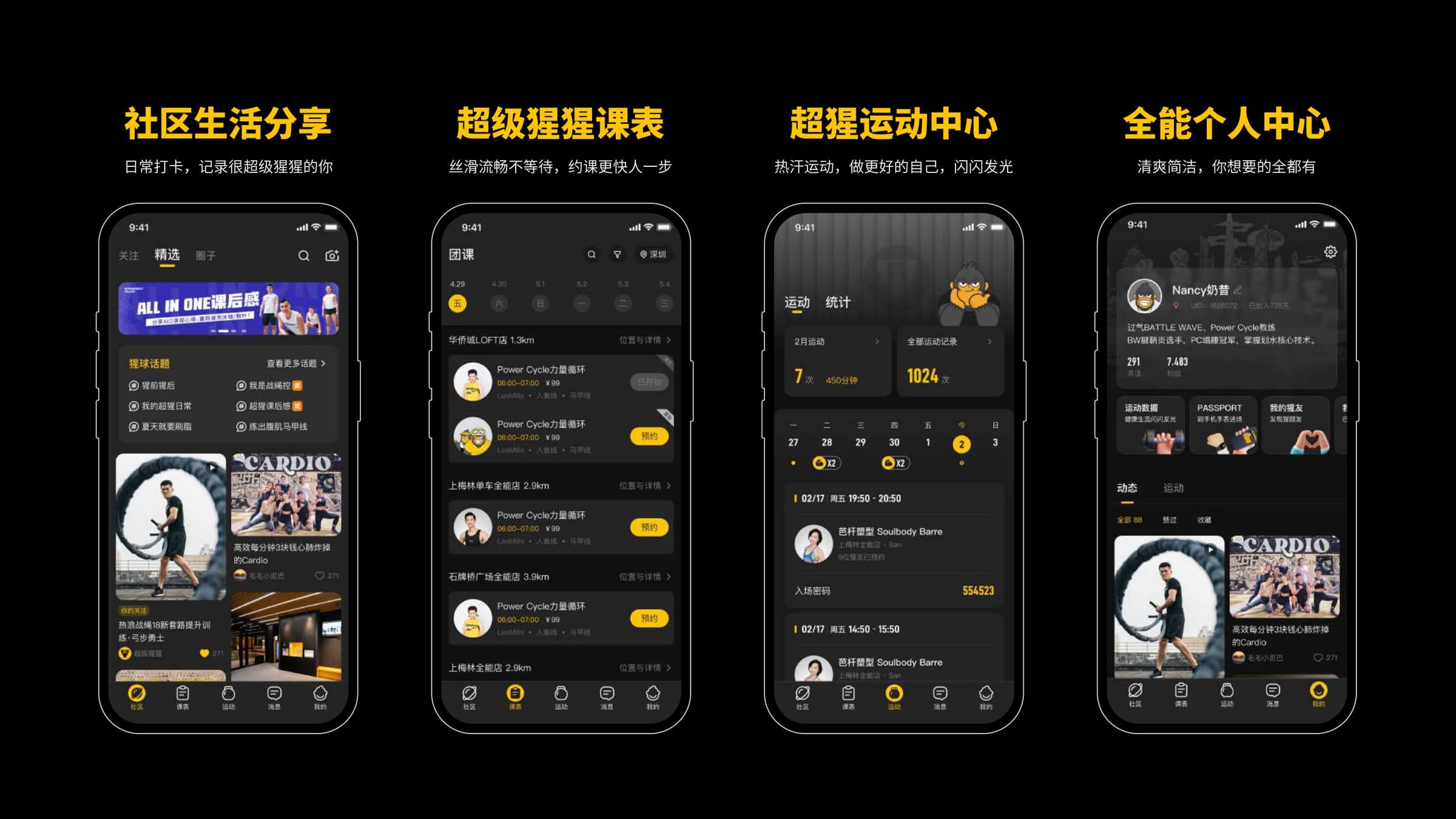
Community / class schedule / fitness centre / profile. Each module has a different job but shares one visual language, so moving between them feels like navigating one thought, not four apps.

Super Mock — intro
Super Mock — four modules

06 — Data & habit

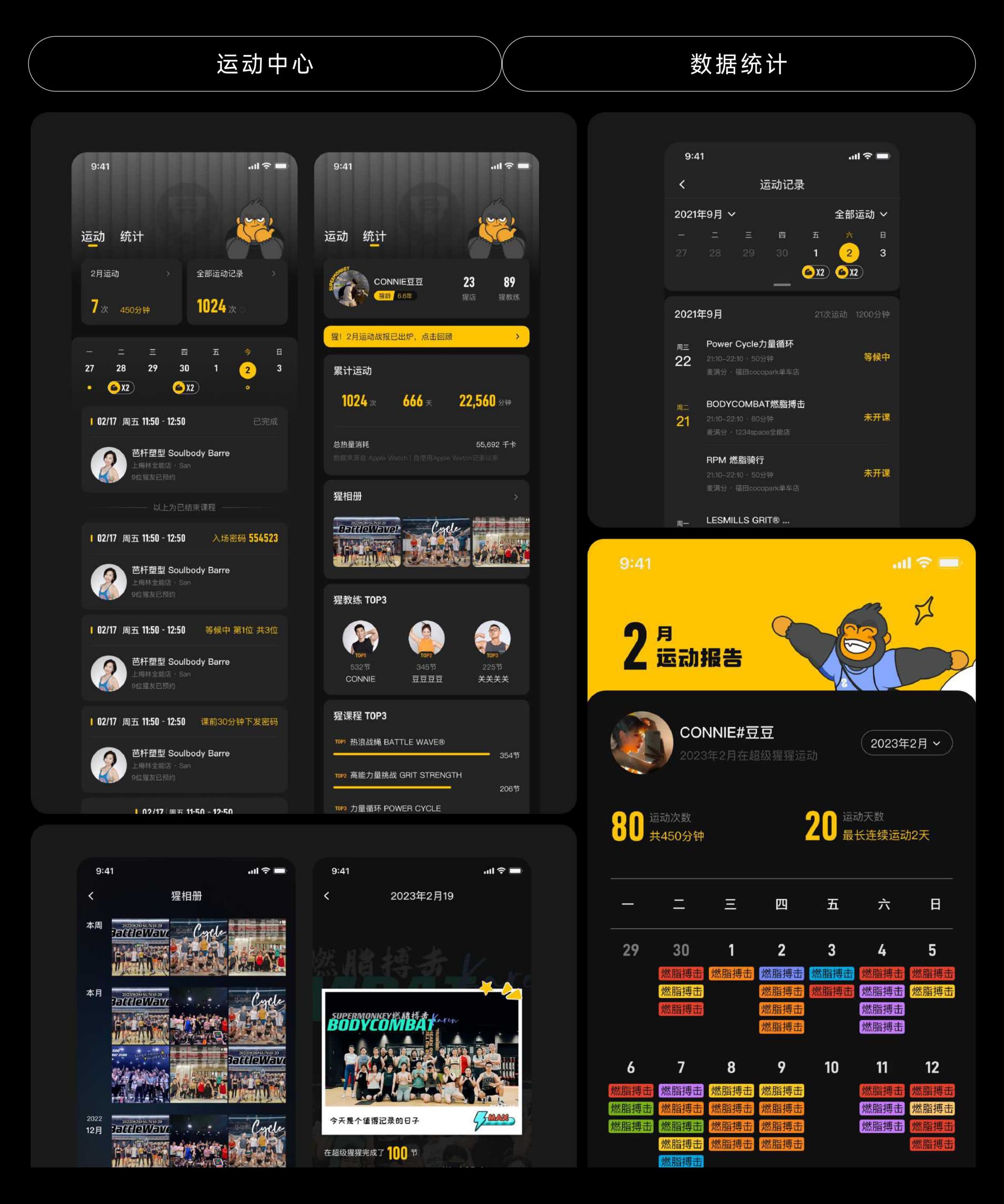
Fitness centre & post-class sharing

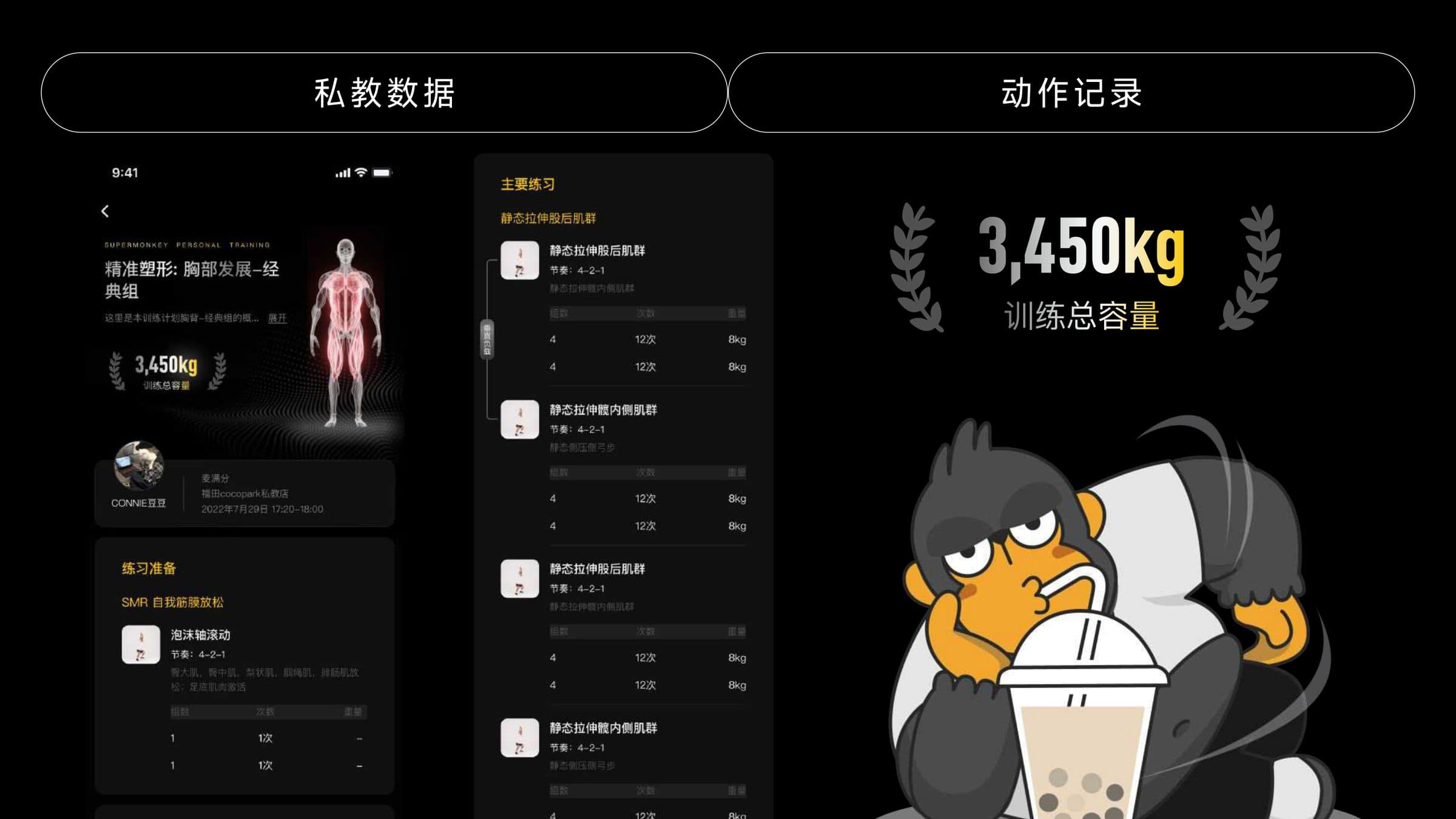
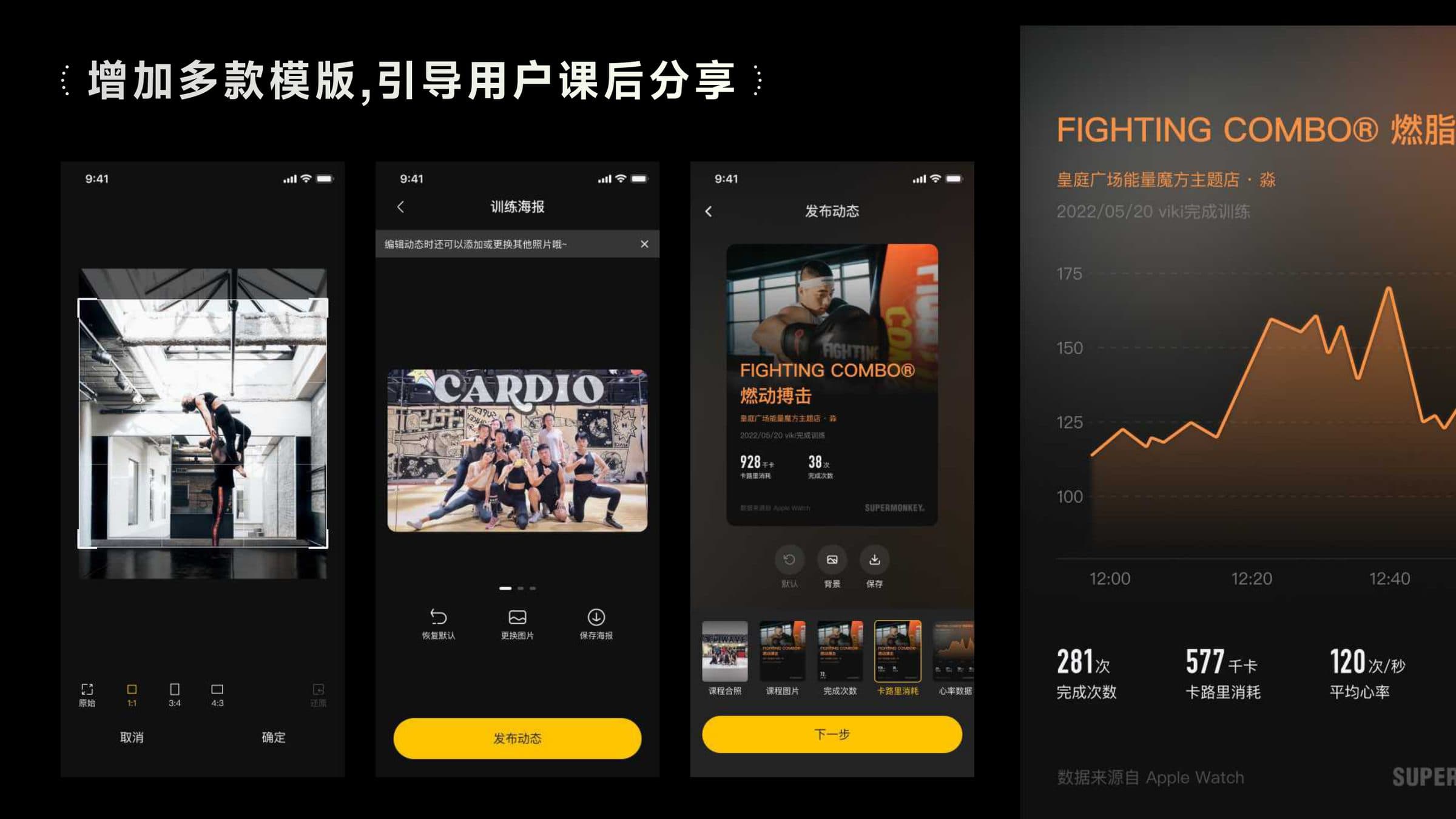
Data is the emotional receipt of a workout. I designed a fitness centre dashboard with personal training stats and movement records, then paired it with share templates that turn that receipt into a post worth showing off.

Fitness centre — data overview
PT data & movement records
Post-class share templates

The Process

Key decisions

The choices that shaped the work — not every option I considered, just the ones that ended up defining it.
  1. 01

    Cards earned the right to replace lists

    A card-based layout is more expensive per screen — bigger gaps, more imagery, fewer items visible. I defended the change because the previous list-density was compressing conversion: users scrolled faster but decided slower. The card rhythm gave each class its own moment of attention, and the numbers followed.

  2. 02

    Wayfinding is design work

    Nobody asked me to ship a Store Guide spec. Classes were being missed because studios were hard to find; that's a UX problem, regardless of whether it appears on a screen. Making the spec ops-friendly — one template, locally populated — turned a chronic complaint into a procedural fix that scaled without me.

  3. 03

    Treat the share template as a product

    Post-class sharing was the cheapest acquisition channel the product had, but the share templates were an afterthought. I redesigned them with the same care as in-app screens — multiple layouts, tasteful graphics, real data — and turned a polish-task into a recurring growth surface.

Impact

What the work actually did.

01

The problem it solved

Booking friction was reduced in a category where pay-per-class means every booking matters. Studio wayfinding stopped being a recurring complaint. Post-class sharing stopped being an afterthought and became a recurring growth channel. Across three years the product's tempo settled into one clear visual rhythm across every surface.

02

How the design answered

Design decisions were treated as behavioural experiments — cards vs lists, hover vs permanent actions, share layouts A/B/C — with the outcome always measured against a number in the funnel. Growth came from accumulating small wins grounded in evidence, not single redesigns.

03

Value left behind for the team

  • 01

    Super Friday traffic up 21.73% after the booking-flow redesign.

  • 02

    2021 Double 11 recharge hit RMB 140M — 30% over target, a single-campaign company record.

  • 03

    2022 Double 11 recharge RMB 178M — 25% YoY growth on the previous year's record.

  • 04

    Store Guide spec rolled out across all city-level ops teams, adopted as an ongoing studio-onboarding standard.

  • 05

    Post-class AIGC share templates scaled to 16 categories with 200+ entries, and became one of the top self-referred growth channels.

Reflection

What this project leaves me with.

Three years inside a single product is an unusual thing for a designer today, and it changed how I work. You cannot outrun your own decisions; every flow you shipped eighteen months ago comes back and asks you what you meant. That pressure turns you into someone who leaves notes for future-you — and, it turns out, good notes for future-you are also good specs for the rest of the team.

The other lesson: treat emotion as a measurable variable. It is uncomfortable to put numbers next to "how the post-class screen feels", but the moment you do, you can actually move it. Most of my highest-leverage work at SUPERMONKEY came from that uncomfortable posture.

If I had a fourth year, I'd push much harder on coach-to-user feedback loops — a space where the product is still mostly transactional, but where the emotional business value is the largest.

Next project 06 / 06

UNICE

Re-architecting the information of a top-ranked overseas DTC site.

Continue